Technology

Six systems,explained plainly

No invented terminology and no unsupported claims. Each chapter describes what a system does, why it exists and — where a figure is published — what it achieves.

01 · Electrification

800-volt systems

Porsche introduced an 800-volt architecture with the Taycan in 2019 and has carried it into the Macan Electric and Cayenne Electric. Higher voltage means lower current for a given power: thinner, lighter cabling, less heat, and DC charging that stays high for longer. The Cayenne Electric accepts up to 400 kW and moves from 10 to 80 percent state of charge in under 16 minutes under ideal conditions.
800V

System voltage

400kW

Peak DC — Cayenne Electric

<16min

10–80 % SoC

02 · Combustion

T-Hybrid

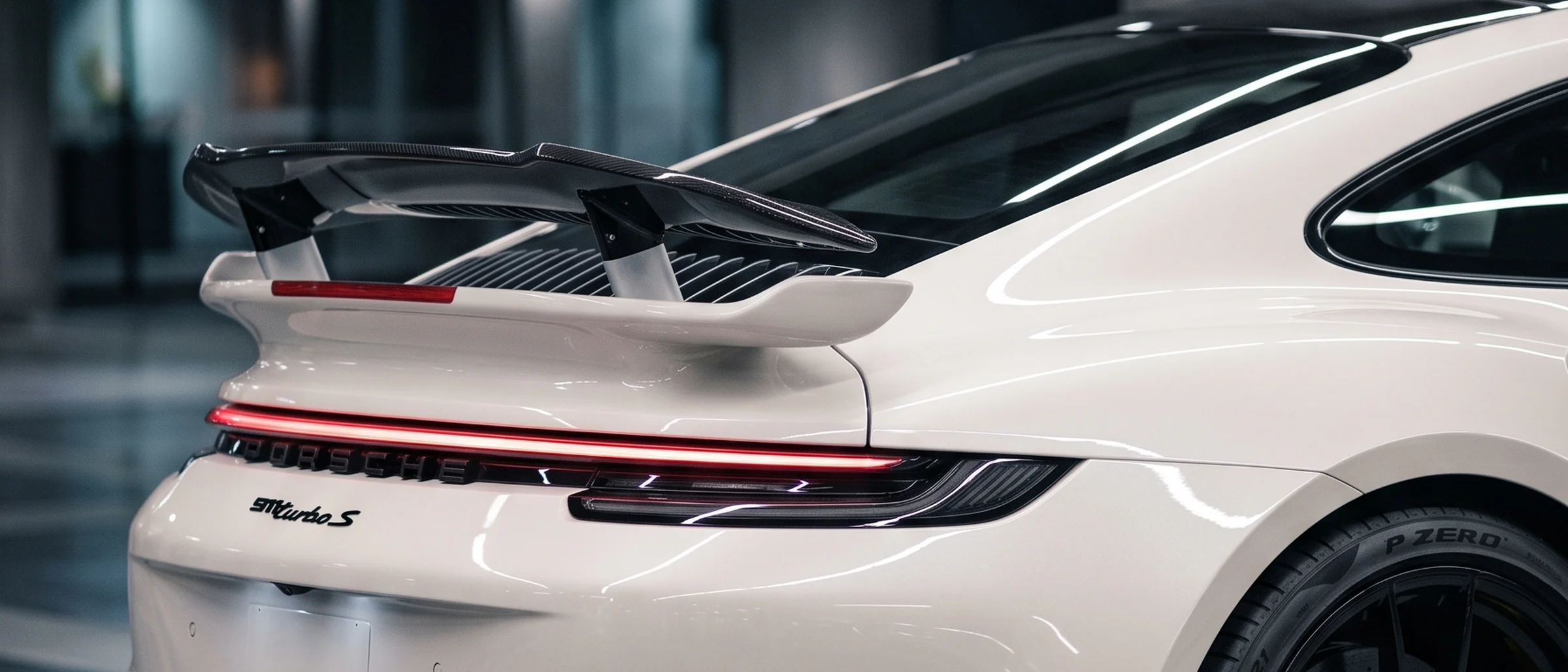
T-Hybrid is not a plug-in system and adds no electric-only range. An electric exhaust-gas turbocharger raises boost pressure faster and recovers energy from the exhaust stream; a second electric motor inside the PDK supplies torque immediately at low engine speeds. A compact 400-volt battery buffers the energy. On the 911 Turbo S the arrangement produces 711 PS and 800 Nm sustained from 2,300 to 6,000 rpm.

711PS

911 Turbo S

1.9kWh

Buffer battery

400V

Hybrid system

03 · Transmission

Two speeds, one axle

The Taycan uses a two-speed transmission on the rear axle. First gear supplies the torque multiplication needed for a launch; second gear keeps motor speed low at cruising speed, protecting efficiency. It is a deliberately mechanical answer to a problem most electric cars solve with a single compromise ratio.

2speed

Rear transmission

320kW

Peak DC — Taycan

18min

10–80 % SoC

04 · Plug-in hybrid

Motor inside the gearbox

In the Panamera Turbo E-Hybrid a 140 kW electric motor is integrated into the eight-speed PDK between the V8 and the transmission output. It drives the car alone for a WLTP-rated 75 – 83 km, fills torque gaps during shifts, or adds its output to the engine for a combined 680 PS.

680PS

System power

25.9kWh

Battery

83km

Electric range, WLTP

05 · Chassis

Rear-axle steering

Steering the rear wheels in the opposite direction to the fronts at low speed shortens the effective wheelbase and tightens the turning circle. Above a threshold speed the rear wheels turn in the same direction, lengthening it and stabilising lane changes. Offered across the range depending on model and variant.

06 · Charging

Cable-free

The Cayenne Electric can be specified with Porsche Wireless Charging, an inductive floor plate that transfers up to 11 kW. The car aligns itself over the plate and charges without any cable handling.

11kW

Inductive transfer

Charging

What 800 volts is actually for

Charging speed is a heat problem. Higher voltage moves the same power at lower current, and lower current means less waste heat to get rid of.

400kW

Cayenne Electric

Peak DC charging power.

<16min

Cayenne Electric

10–80 % state of charge, ideal conditions.

325km

Ten minutes

WLTP range added, Cayenne Electric.

270kW

Macan Electric

Peak DC charging power.

A caveat

What is not claimed here

Range, consumption and charging figures depend on temperature, charger output, state of charge and driving. The values quoted are the published WLTP or manufacturer figures for a named variant — not a promise about any individual journey.

This site makes no environmental claim about any drivetrain. Where a figure is unavailable or could not be verified against an official source, it has been left out rather than estimated.

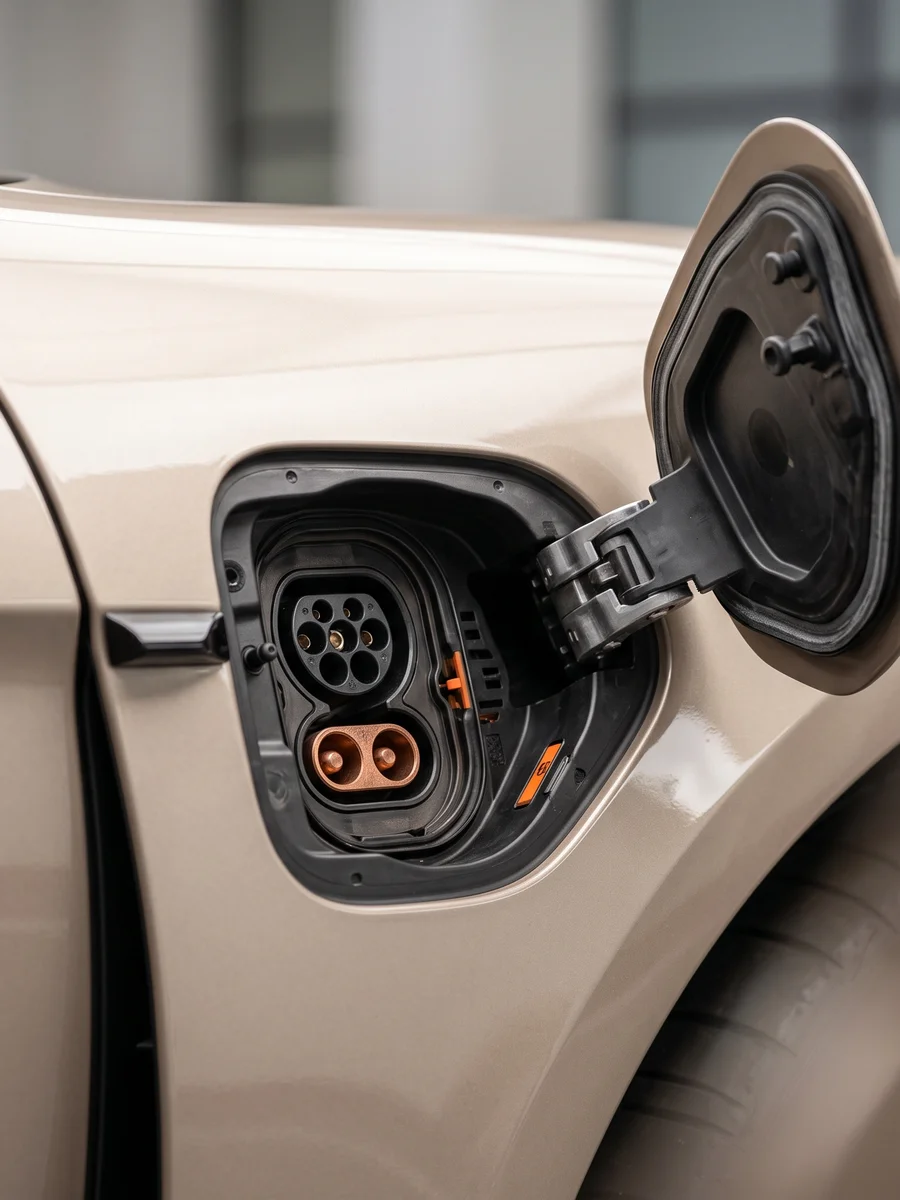
Close-up of a charging port on an electric Porsche