Concept project · Not affiliated with Porsche AG
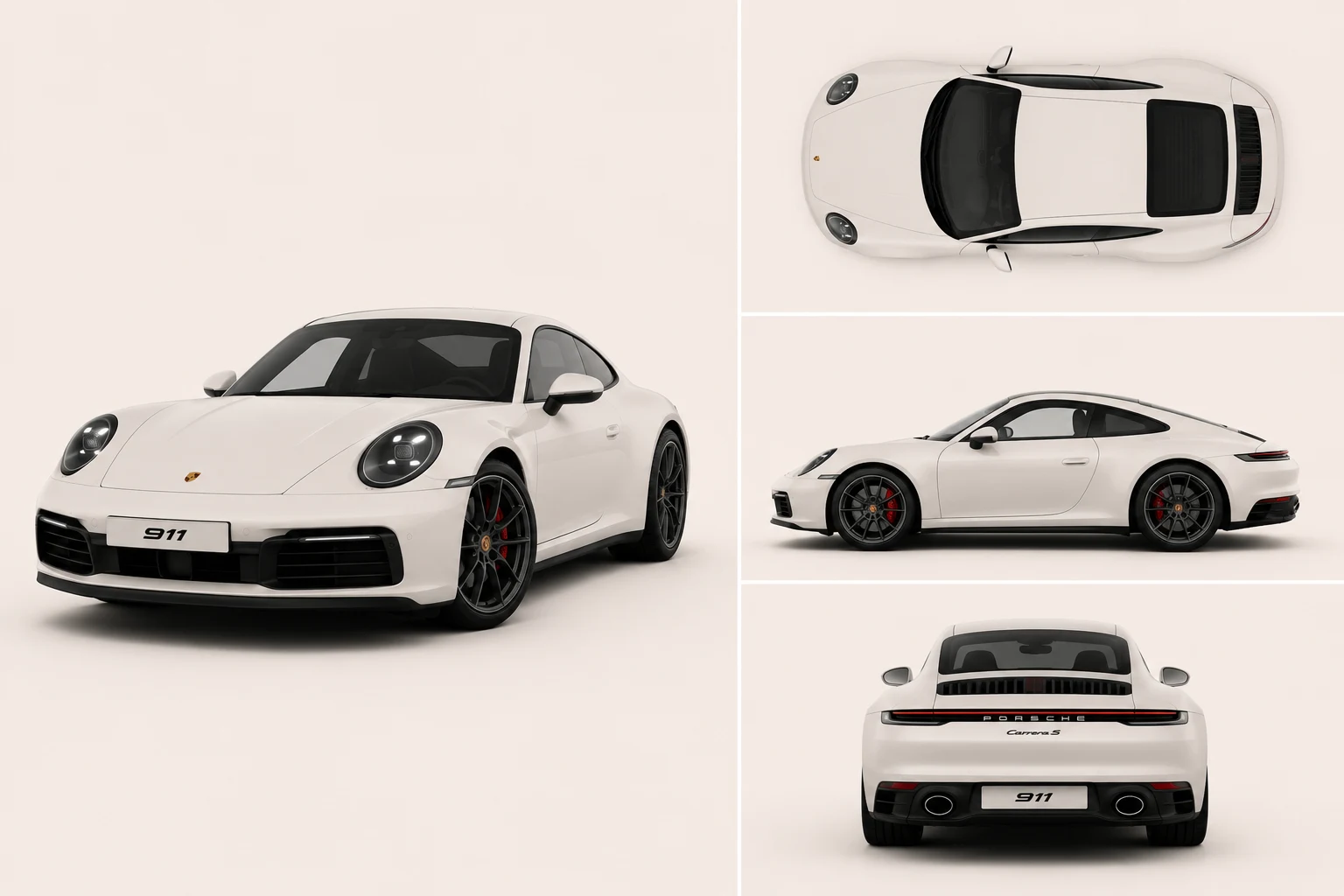
911 · Pearl Ivory White
The artof performance
Six decades of one idea, refined rather than replaced: put the engineering first and let the shape follow from it.
Scroll
01
The idea
Engineering, then everything else.
Porsche began as a consultancy, not a car maker. Ferdinand Porsche's design and engineering office was entered in the Stuttgart commercial register on 25 April 1931 with a staff of twelve; for seventeen years it sold engineering to other people.
The first car to carry the name arrived on 8 June 1948, when the 356 “No. 1” Roadster received its general operating permit — an aluminium body over a four-cylinder engine mounted ahead of the rear axle. Fifteen years later the 911 moved the engine behind the rear axle and fixed an architecture that has survived every change in regulation, material and electronics since.
That sequence still describes how the range is put together. The 800-volt electrical architecture introduced with the Taycan in 2019 now underpins the Macan and Cayenne Electric. T-Hybrid on the 911 exists to remove turbo lag, not to add electric range. Each decision answers a specific engineering question rather than a marketing one.
02 · The range
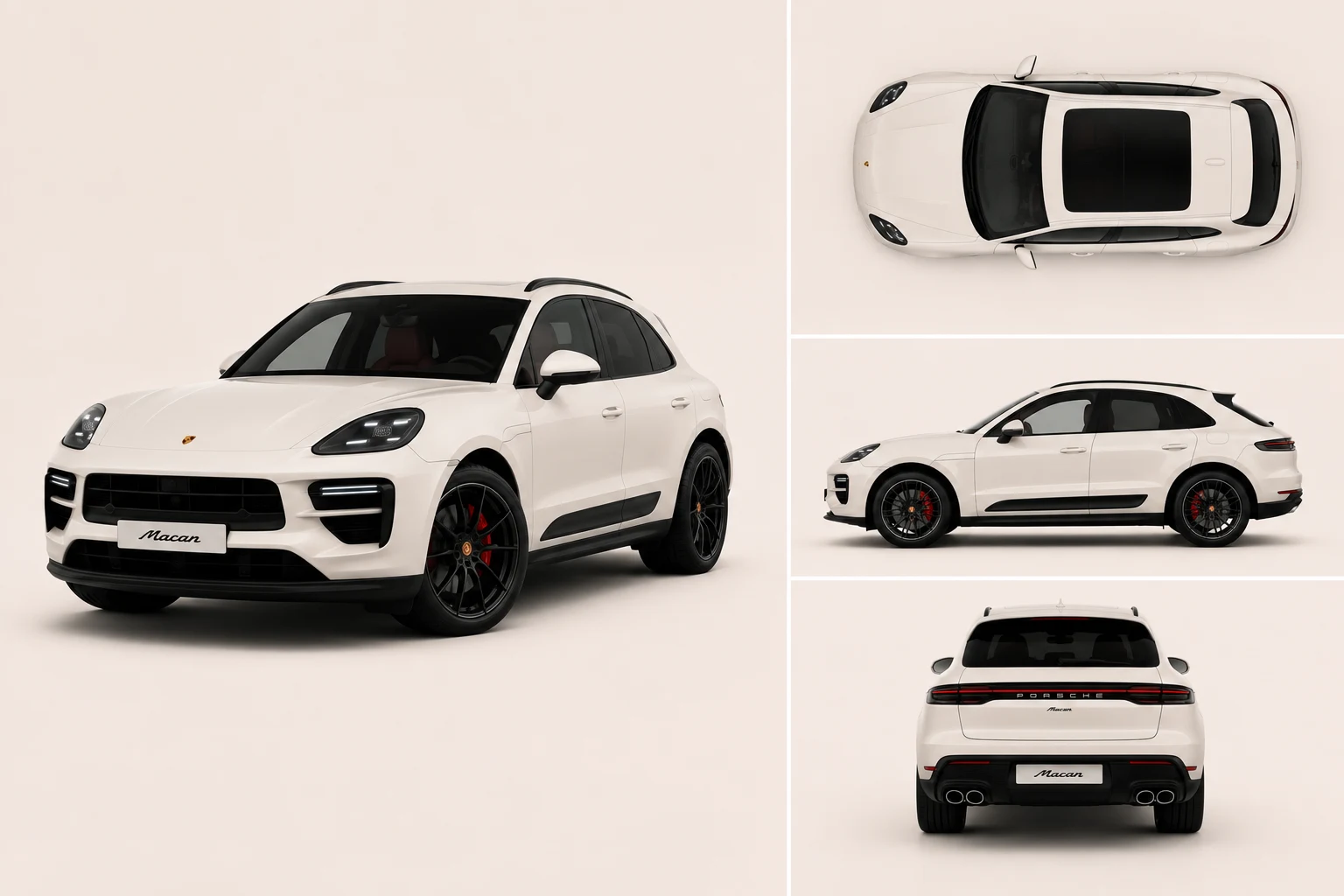
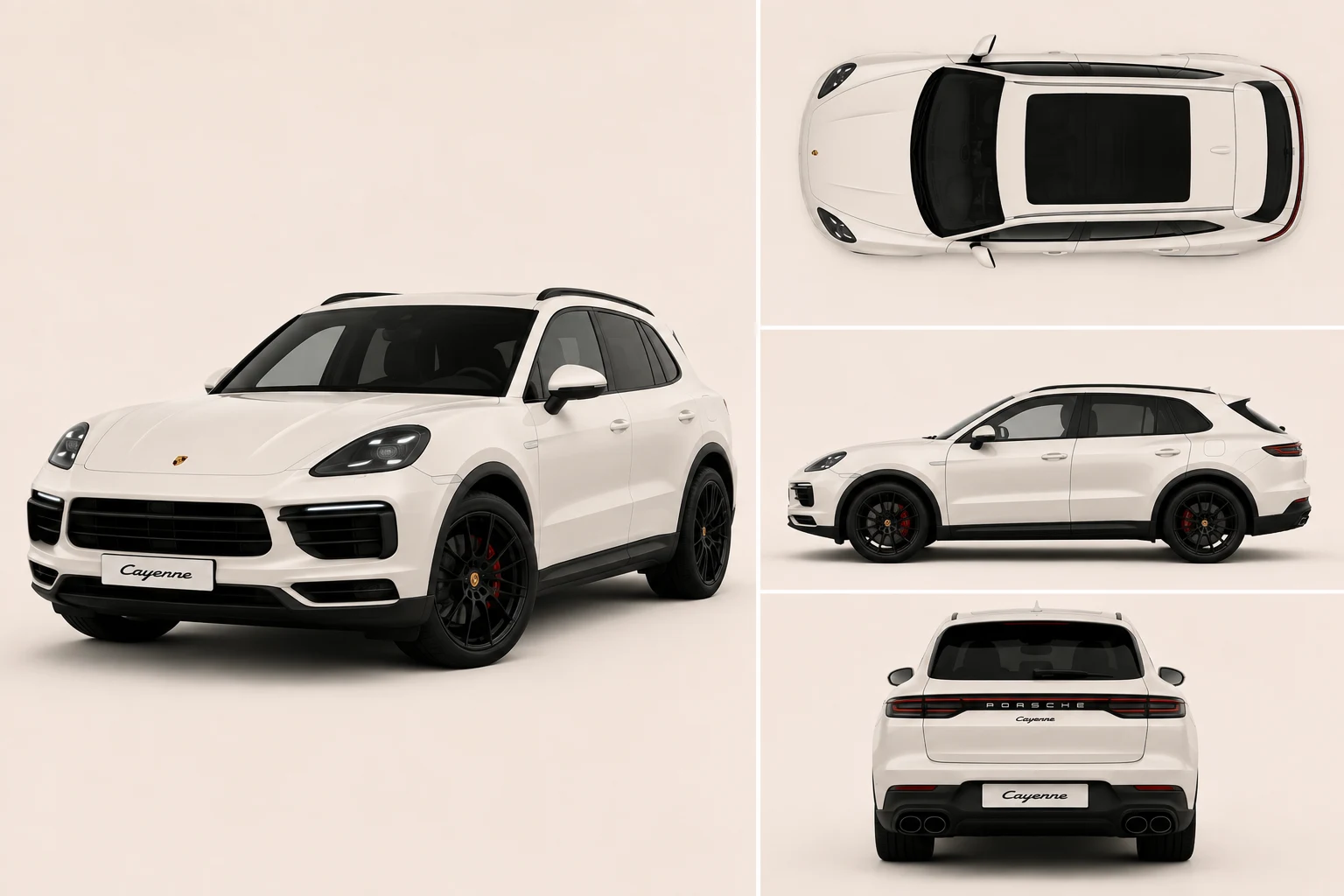
Six model families
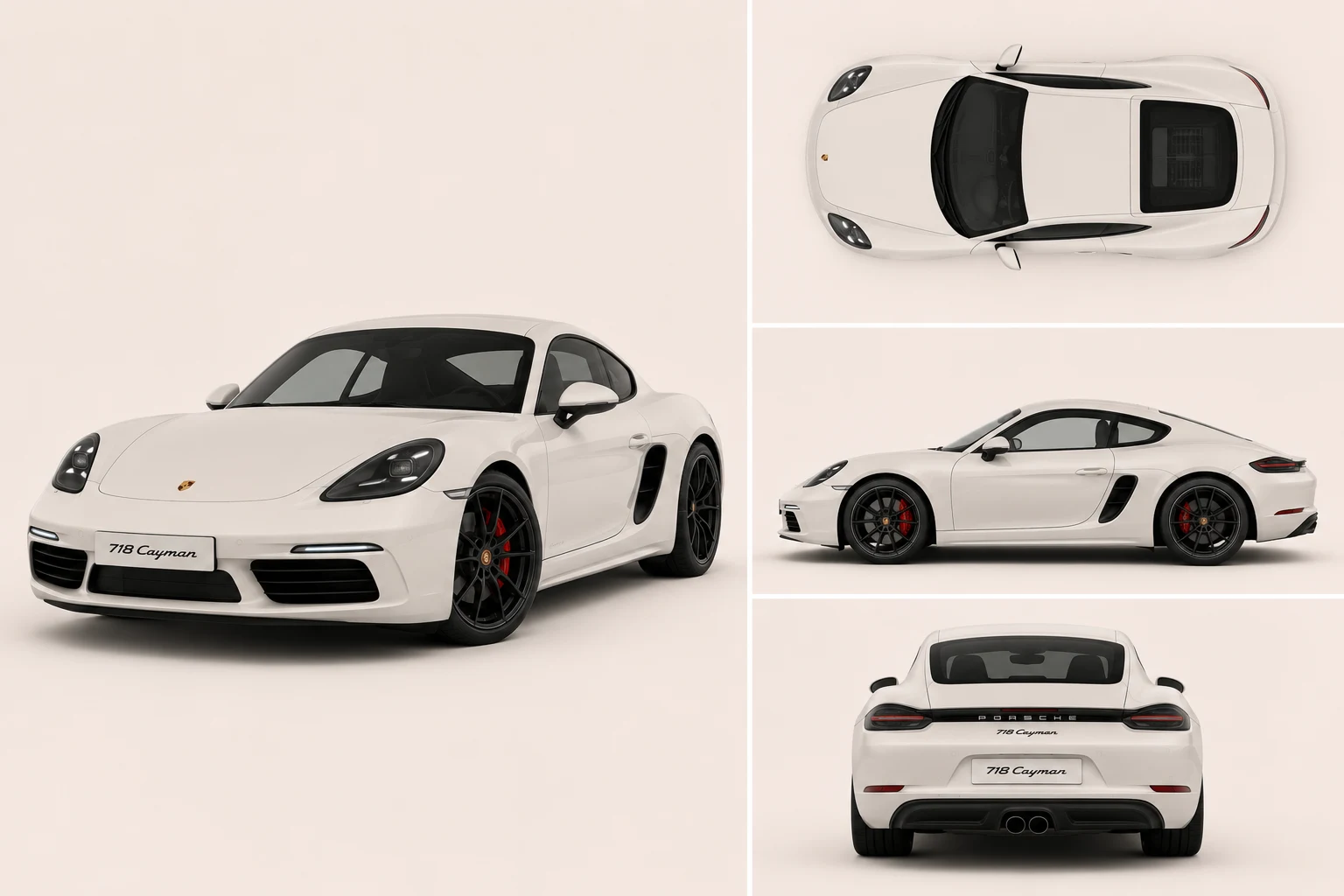
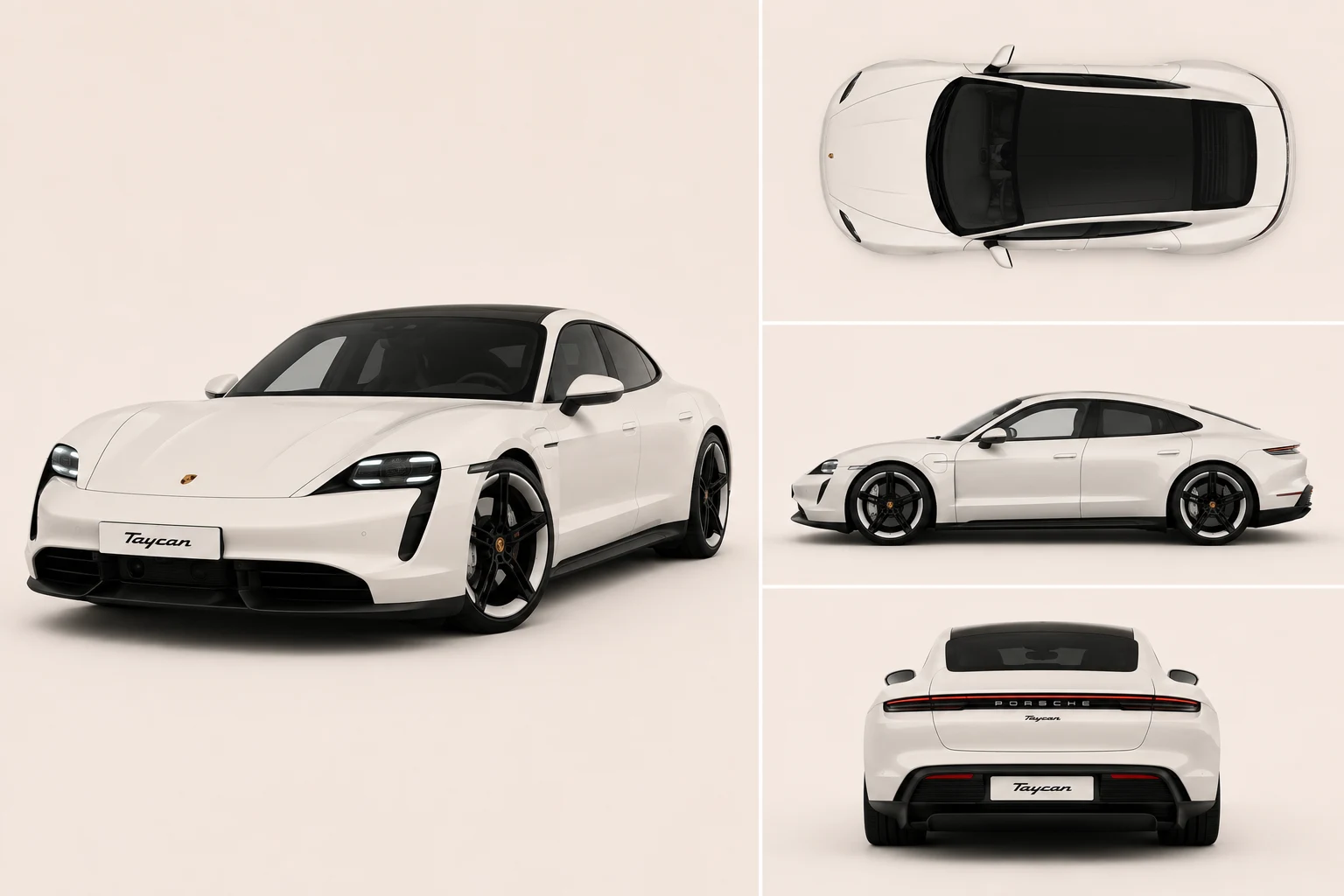
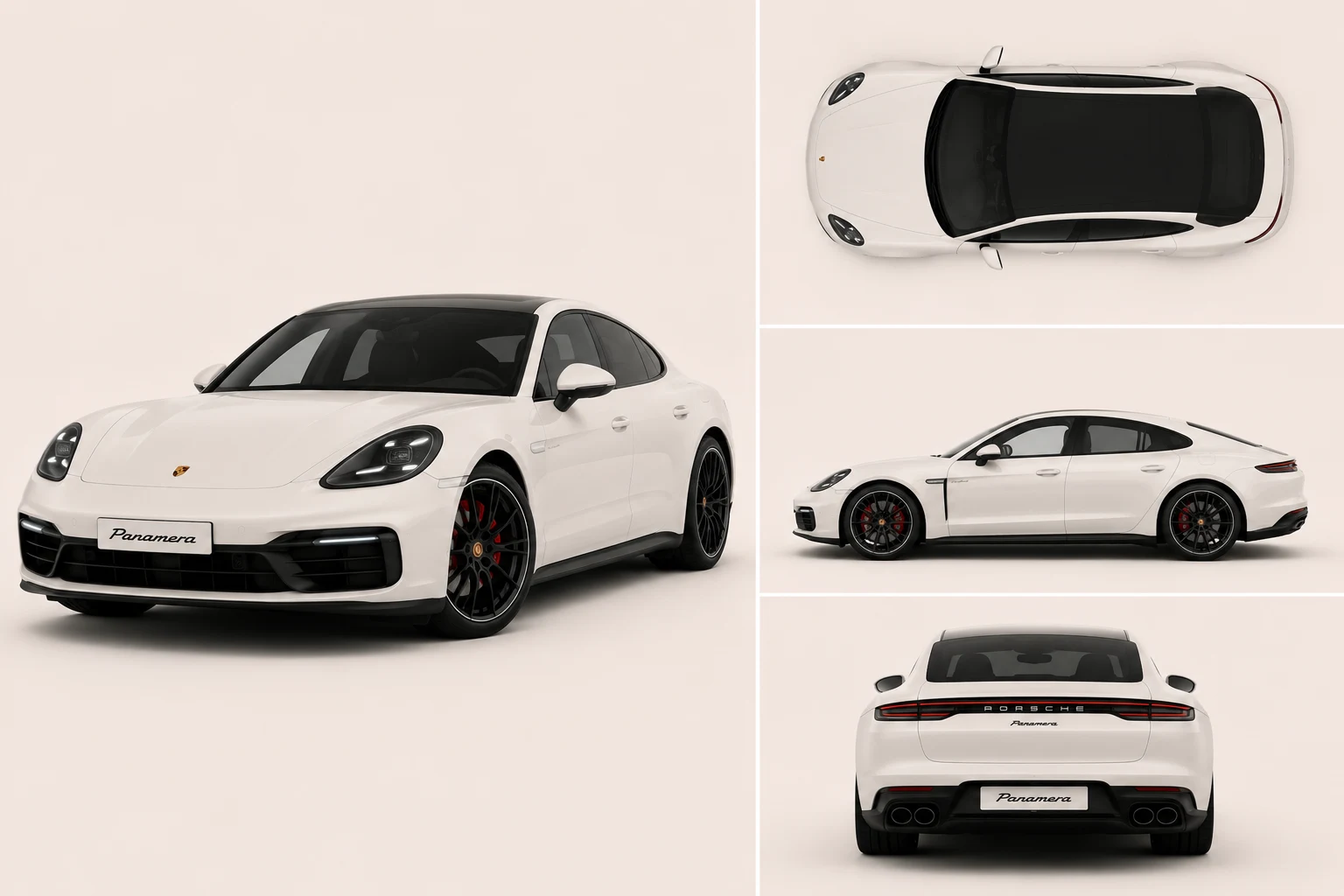
Two sports cars, a luxury sedan and two SUVs — now spanning petrol, plug-in hybrid, T-Hybrid and fully electric drivetrains.
03 · Performance
Numbers that survive the second lap
Peak output is easy. Repeating it — after the brakes are hot, after the battery has worked, after an hour of load — is the engineering problem worth solving.
Response before peak
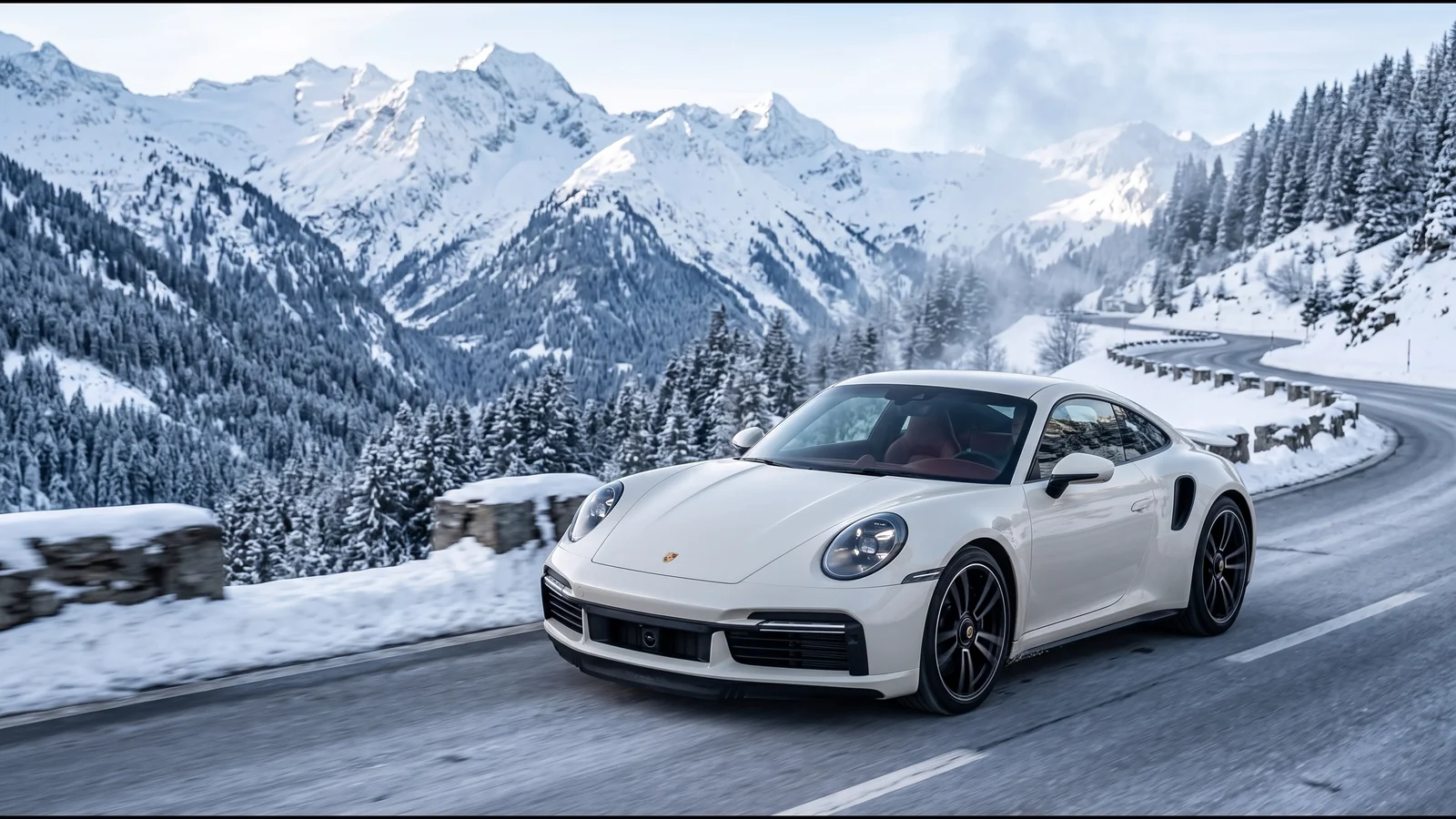
On the 911 Turbo S, two electric exhaust-gas turbochargers spin up under electrical power instead of waiting for exhaust flow. Maximum torque of 800 Nm holds from 2,300 to 6,000 rpm — a wide plateau rather than a narrow spike.
Mass in the right place
The flat-six is short and low. Mounted behind the rear axle it loads the driven wheels under acceleration; mounted between the axles in the 718 it lowered the polar moment of inertia instead. Two different answers, both about where the weight sits.
Adjustable aerodynamics
Downforce costs drag, so the trade is made variable. Active rear spoilers deploy with speed and driving mode rather than being fixed at a compromise angle.
Braking as a system
Ceramic composite discs cut unsprung mass and resist fade. On electric models the friction brakes only join in once deceleration demand exceeds what recuperation can absorb.
711PS
911 Turbo S
System power, T-Hybrid. Type 992.2.
2.5s
0–100 km/h
911 Turbo S Coupé.
322km/h
Top speed
911 Turbo S Coupé.
800Nm
Torque plateau
Held from 2,300 to 6,000 rpm.
04 · Electric
800 volts, on purpose
The Taycan was presented on 4 September 2019 at a premiere staged simultaneously on three continents. Its defining choice was system voltage: doubling it halves the current for a given power, which means thinner cabling, lower thermal losses and DC charging that holds high for longer.
A two-speed transmission on the rear axle does the rest — a short first gear for launch, a long second for efficiency at speed. The same 800-volt thinking now carries the Macan Electric and the Cayenne Electric.
520–609km
Taycan range
WLTP combined, rear-wheel drive, EU.
320kW
Peak DC charging
With Performance Battery Plus.
18min
DC 10–80 %
At maximum charging power.
1,034PS
Taycan Turbo GT
Overboost with Launch Control.
05
Heritage
Dates, not folklore
Every entry below was checked against Porsche Newsroom or porsche.com. Nothing here is rounded, softened or repeated from memory.
1931
An engineering office in Stuttgart
Ferdinand Porsche's design and consultancy office was entered in the Stuttgart commercial register on 25 April 1931, at Kronenstraße 24. It began with a staff of twelve and sold engineering, not cars.
1948
356 “No. 1” Roadster
On 8 June 1948 the 356 “No. 1” Roadster received its general operating permit. Aluminium body, four-cylinder engine mounted ahead of the rear axle. It is the point at which the name moved from the letterhead onto a car.
1963
The 911 arrives
Shown at the IAA in Frankfurt as the 901 and renamed 911 before series production. Rear-mounted flat-six, 2+2 seating, a roofline that has never been abandoned.
1970
First overall victory at Le Mans
On 14 June 1970 Hans Herrmann and Richard Attwood won the 24 Hours of Le Mans outright in the Porsche Salzburg 917 KH, start number 23 — 343 laps, 4,607.811 km. Heavy rain reduced the field: of 57 starters, seven were classified.
1971
Weissach opens
The Weissach Development Centre was officially opened on 1 October 1971, bringing design, testing and its own proving ground onto one site.
2015 – 2017
Three Le Mans wins with the 919 Hybrid
The 919 Hybrid took overall victory at the 24 Hours of Le Mans in 2015, 2016 and 2017 — a hybrid prototype programme that fed directly into road-car energy recovery work.
2019
Taycan
Porsche's first series production electric car was presented on 4 September 2019, at a premiere held simultaneously on three continents. Its 800-volt architecture set the template for everything electric that followed.
06 · Configure
Build a 911
in ivory and bordeaux
A concept configurator: three exterior finishes, three interior treatments, three wheel sets. No backend, no pricing — the interface exists to show how the range's material palette works together.