Performance · Engineering
Performance
Fast isa consequence
Not a target set at the start, but what falls out of decisions about mass, air, heat and grip.
01
Philosophy
The second lap
is the real test
A single acceleration run is a thermal problem nobody has had to solve yet. The interesting engineering starts once the brakes are hot, the battery has been worked and the tyres have given up their first-lap grip.
That is why the numbers on this site are quoted with their variant and conditions attached. A 0–100 km/h time measured with Launch Control and the Sport Chrono Package is a different measurement from one taken without them, and neither describes how a car behaves in the eleventh minute of a circuit session.
Where a specification appears here, it names one trim, one model year and one market — because those numbers do not transfer between variants.
800Nm
Torque plateau
911 Turbo S, held 2,300–6,000 rpm.
1,500Nm
Peak torque
Cayenne Turbo Electric, with Launch Control.
1,130Nm
Peak torque
Macan Turbo Electric.
610Nm
Combined torque
911 Carrera GTS, T-Hybrid.
02 · Systems
Four subsystems, one balance
Air, springs, discs and drive. Change one and the other three have to be re-tuned.
01
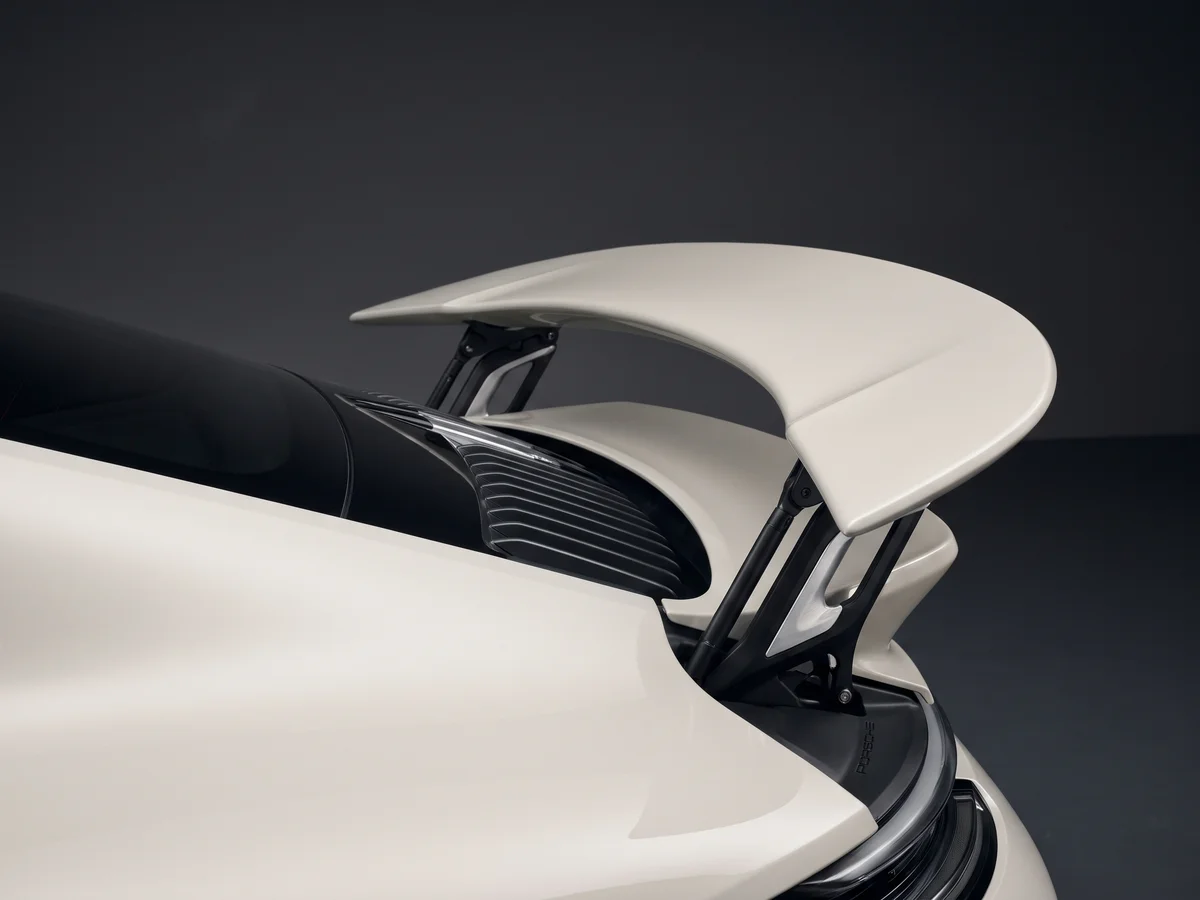
Aerodynamics
Downforce and drag pull in opposite directions, so Porsche makes the trade adjustable rather than fixed. Active rear spoilers deploy with speed and driving mode; underbody surfaces and cooling apertures are shaped to move air where the car needs it rather than where it is easiest to route.
02
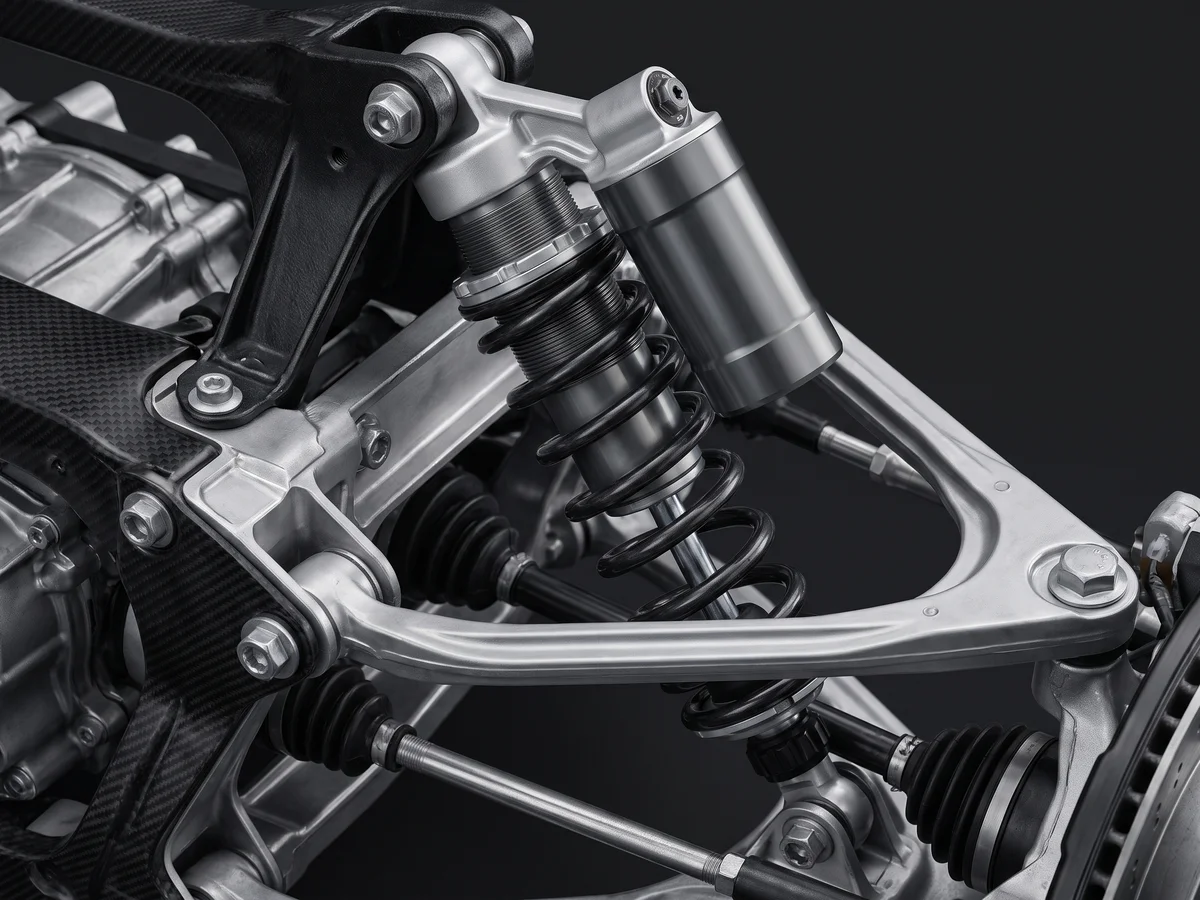
Chassis
Adaptive dampers, air suspension and active anti-roll control let one car hold two positions — compliant enough for a poor road surface, controlled enough for a circuit — without the usual mechanical compromise between them.
03
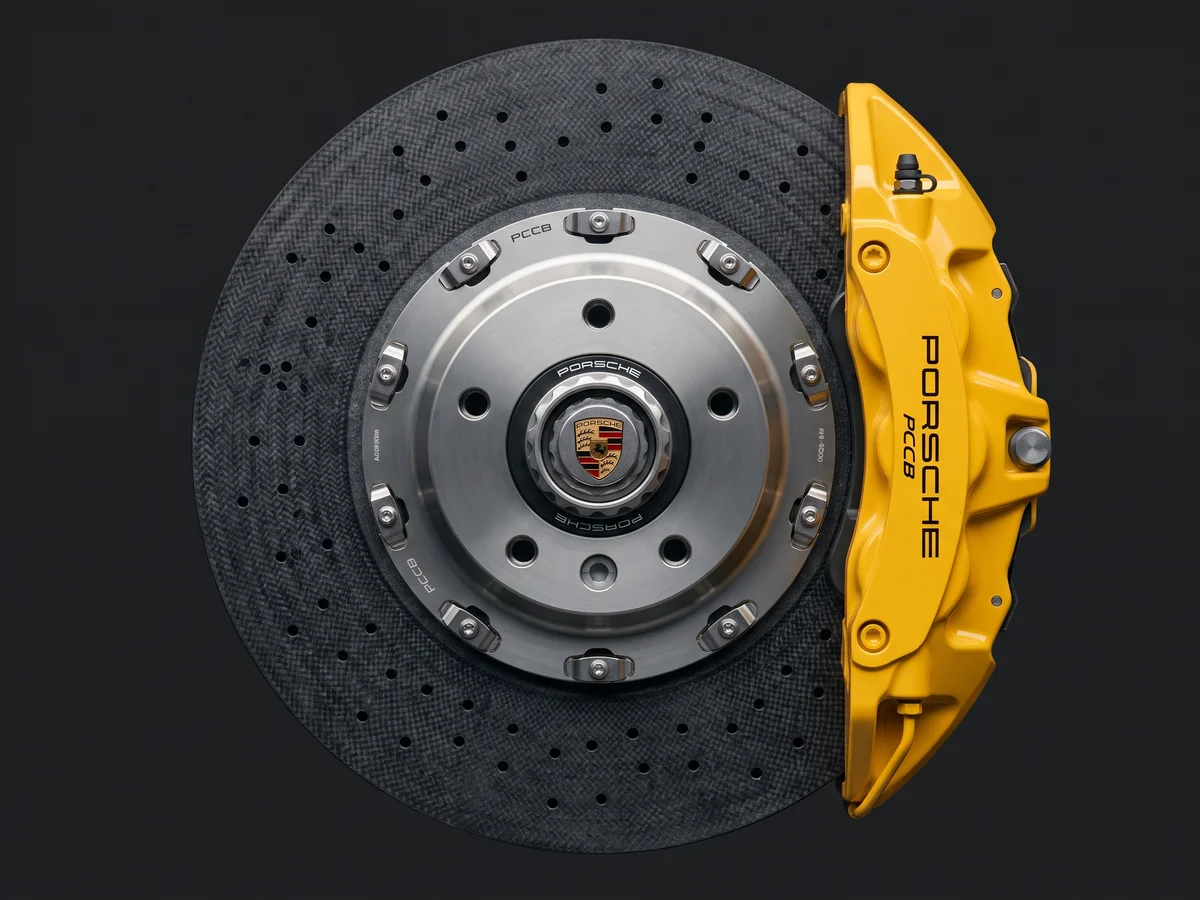
Braking
Steel brakes are standard across the range; Porsche Ceramic Composite Brakes are optional. Ceramic discs cut unsprung mass and resist fade under repeated high-energy stops. On electric models the friction brakes blend in only once deceleration demand exceeds what recuperation can supply.
04
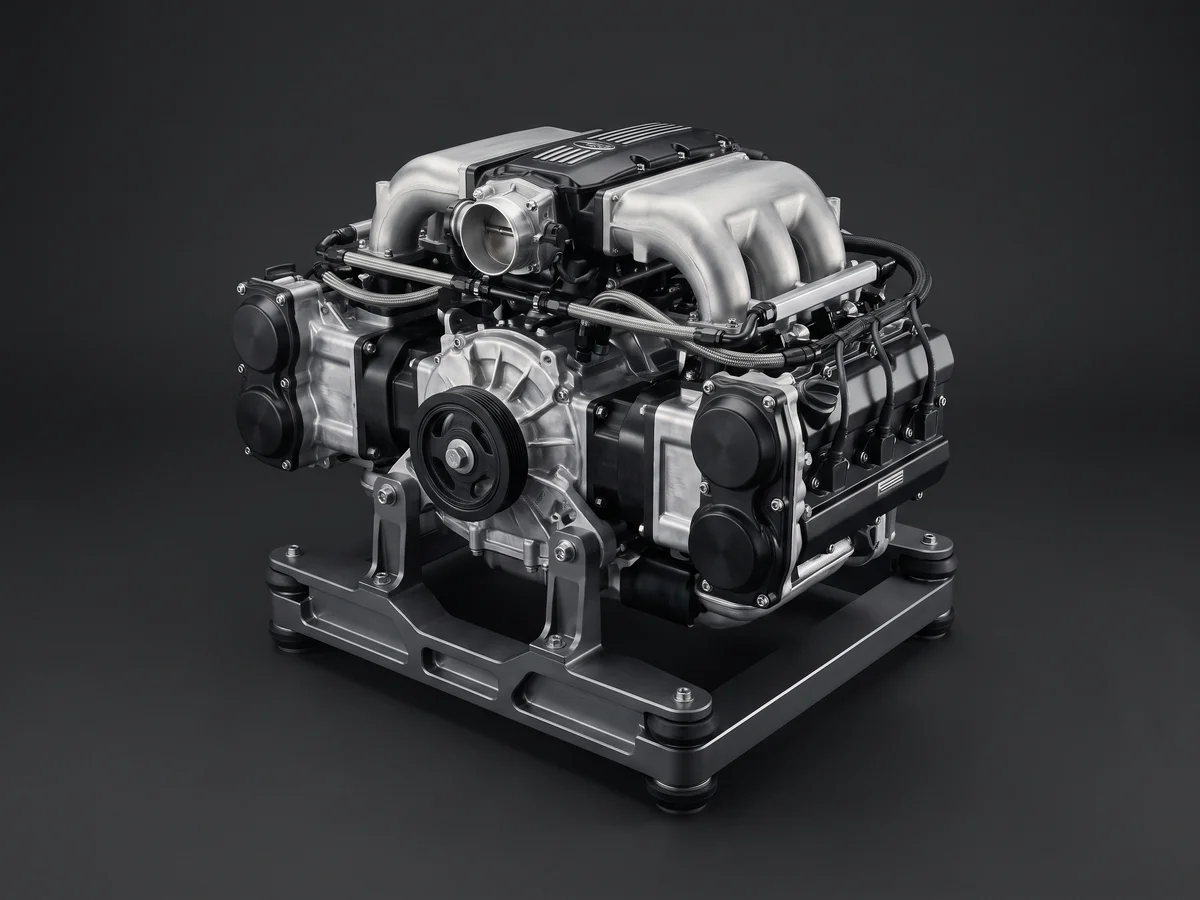
Powertrain
Three answers to the same question. The flat-six keeps mass low and, in T-Hybrid form, uses electrification to remove lag rather than to add range. The plug-in V8 pairs 519 PS of combustion with 190 PS of electric drive. The 800-volt electric drivetrains deliver their peak instantly and repeatedly.
03 · Transfer
From the circuit,
eventually
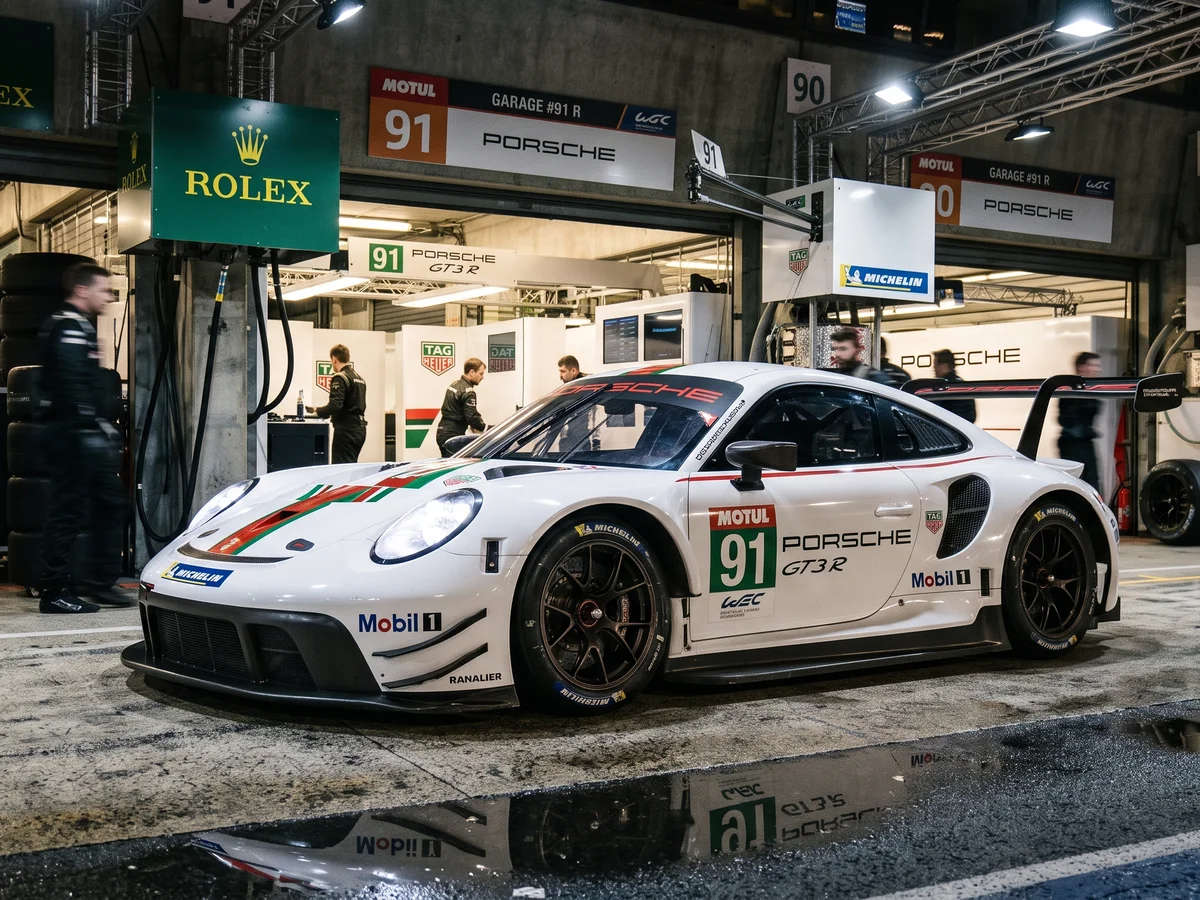
The transfer is slower and less direct than the marketing usually implies, but it is real. The 919 Hybrid programme — three consecutive overall wins at Le Mans in 2015, 2016 and 2017 — ran alongside production hybrid development.
Push-to-Pass is a clearer example: a driver-triggered power boost with a fixed duration, standard practice in racing, now fitted to the Cayenne Turbo Electric where it releases an extra 130 kW for ten seconds.
Next
See it applied
model by model
Every model page carries the same four subsystems, described for that specific car with its own verified figures.