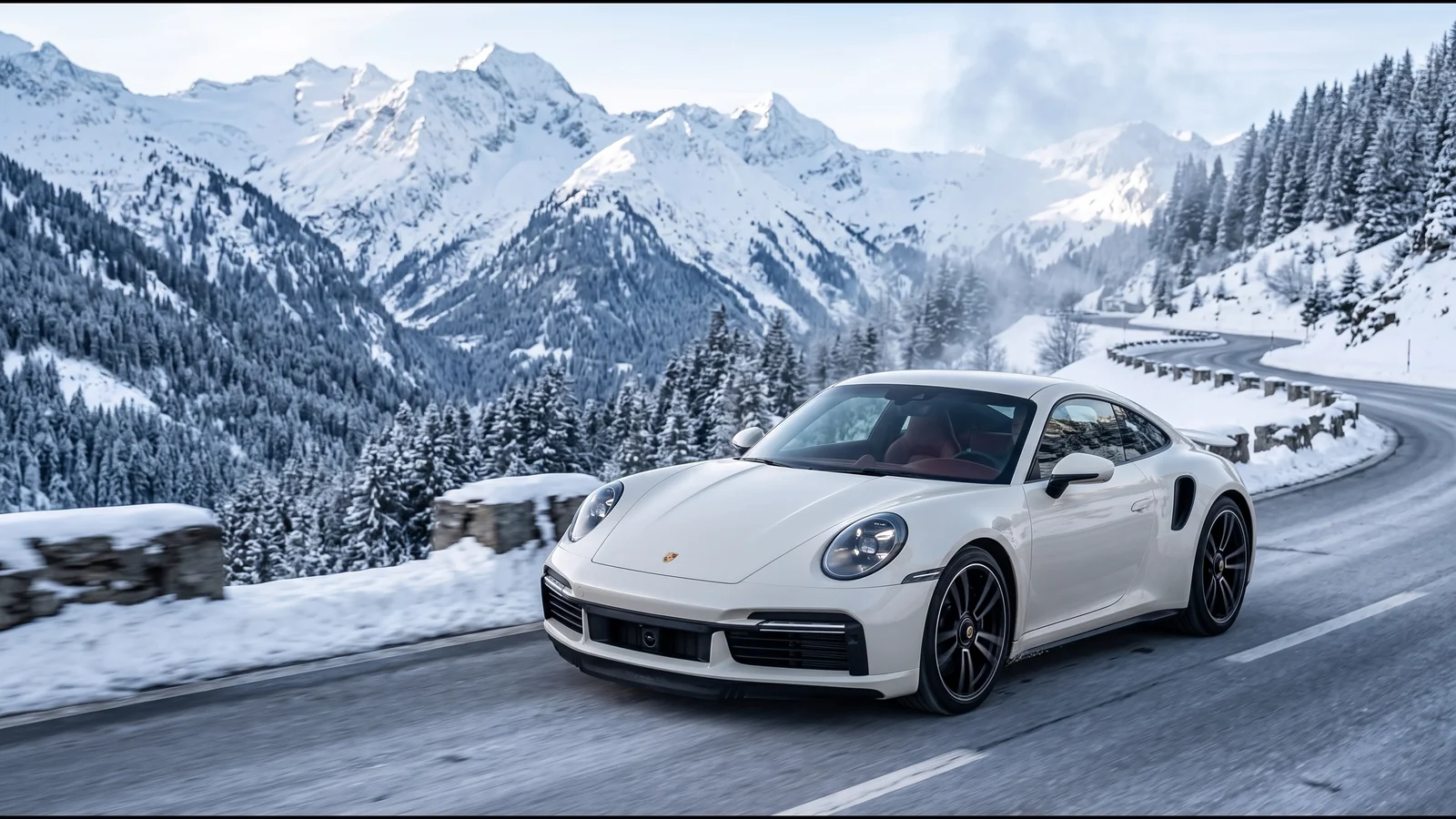
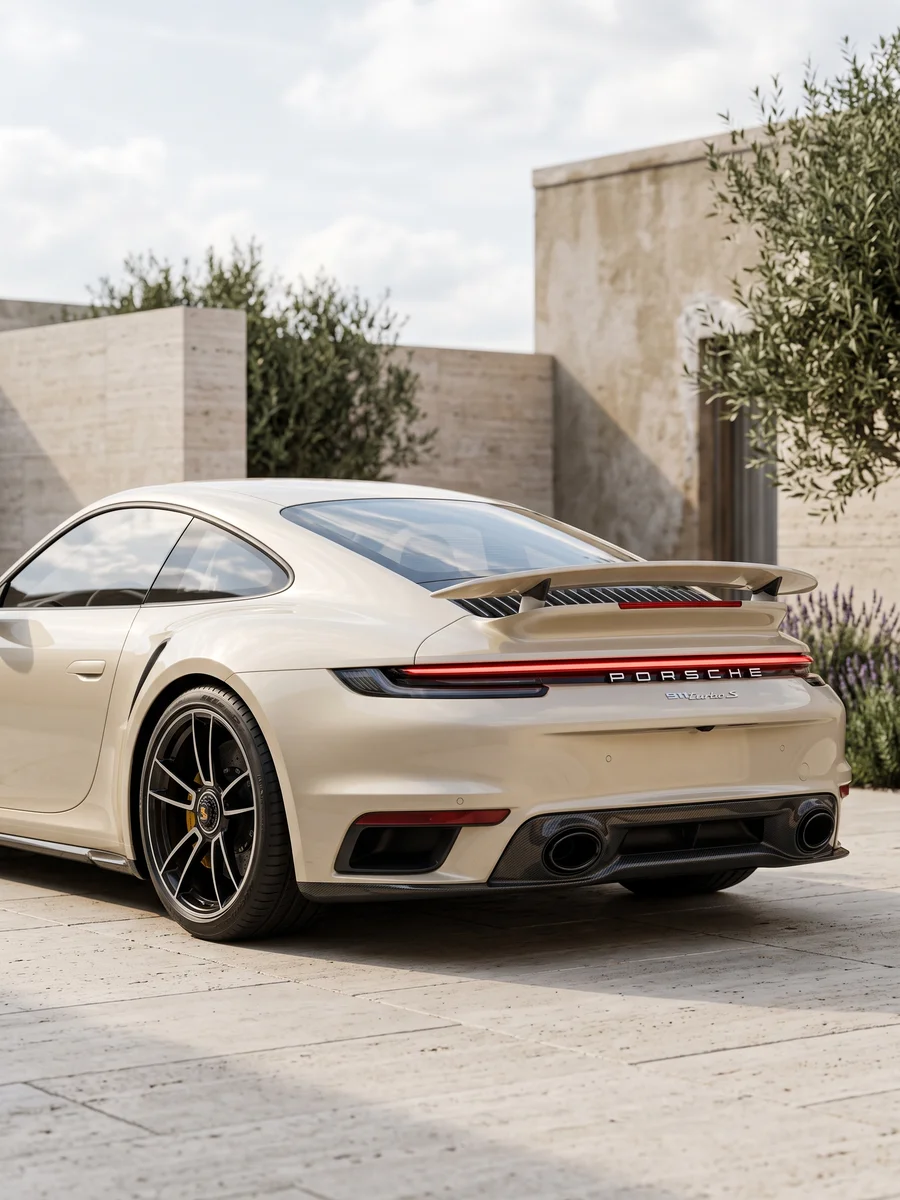
The constant. Rear-engined since 1963 and still recognisably the same idea: a compact flat-six sports car engineered to be used every day and driven hard on Sunday.
In production
711PS
911 Turbo S
2.5s
0–100 km/h
322km/h
Top speed
01
Overview
Type 992.2
The constant.
The 911 has carried the same architecture — flat-six behind the rear axle, 2+2 cabin, unbroken roofline — through more than six decades of regulation, materials and electronics. The current 992.2 generation keeps that layout and adds the T-Hybrid system to the GTS and Turbo S, where a compact 400-volt battery and electrified turbocharging sharpen response rather than extend electric range.
Each block names one variant, one model year and one market. Figures are not interchangeable between trims — a number quoted for a GTS does not describe a Carrera.
911 Carrera (Coupé)
2025 model year, type 992.2Europe (EU), WLTP
Engine
3.0-litre twin-turbo flat-six
Power
290 kW / 394 PS
Max. torque
450 Nm
0–100 km/h
3.9 swith Sport Chrono Package
Top speed
294 km/h
Transmission
8-speed PDK
Drivetrain
Rear-wheel drive
Fuel consumption (comb.)
10.4 – 9.9 l/100 km
CO₂ (comb.)
237 – 227 g/km
Source: porsche.com — 911 Carrera model page
911 Carrera GTS (Coupé, T-Hybrid)
2025 model year, type 992.2Europe (EU), WLTP
Engine
3.6-litre flat-six with T-Hybrid
System power
398 kW / 541 PS
Combined torque
610 Nm
0–100 km/h
3.0 swith Sport Chrono Package
Top speed
312 km/h
Transmission
8-speed PDK with integrated electric motor
Hybrid battery
Compact 400-volt traction battery
Source: porsche.com — 911 Carrera GTS model page
911 Turbo S (Coupé, T-Hybrid)
Presented September 2025 (IAA Mobility, Munich), type 992.2Europe (EU)
Engine
3.6-litre flat-six, two electric exhaust-gas turbochargers
System power
711 PS
Max. torque
800 Nm, from 2,300 – 6,000 rpm
0–100 km/h
2.5 s
0–200 km/h
8.4 s
Top speed
322 km/h
Hybrid battery
1.9 kWh, 400-volt
Source: porsche.com Stories — new 911 Turbo S
Scope. Values are EU figures
measured to WLTP where applicable and were current when this page was written. Specifications change by
model year, variant and market — always check porsche.com for the current figure in your region.
Interior
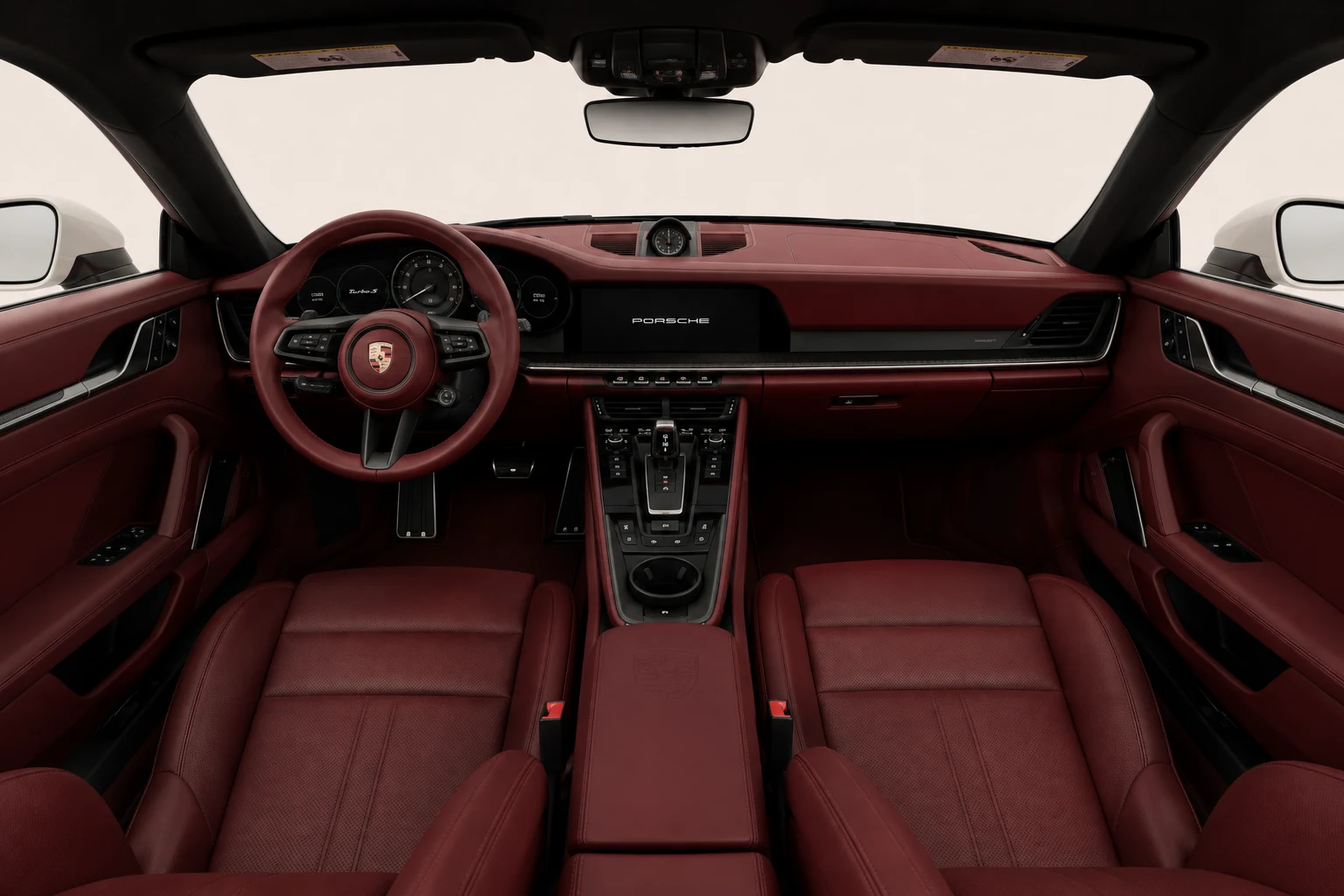
Deep Bordeaux Red leather
The cabin follows the same rule as the exterior: a small number of materials, used honestly, with the driver as the reference point.
06Lighting Indirect ambient light, no coloured wash
Engineering
How it is built
Four decisions that shape how this car behaves — described in the terms the engineers use, without invented terminology.
Rear-engine layout
Mounting the flat-six behind the rear axle loads the driven wheels under acceleration and gives the 911 its traction advantage out of slow corners. Every generation since 1963 has kept the layout and engineered around its consequences rather than away from them.
T-Hybrid
On the Carrera GTS and Turbo S, an electric exhaust-gas turbocharger builds boost pressure faster and recovers energy from the exhaust stream. A second electric motor sits inside the PDK and adds torque instantly at low engine speeds. Both are fed by a compact 400-volt battery — the system exists to sharpen response, not to provide electric-only driving.
Chassis
Rear-axle steering, adaptive dampers and active anti-roll control are offered across the range depending on variant, tightening the effective wheelbase at low speed and stabilising it at high speed.
Braking
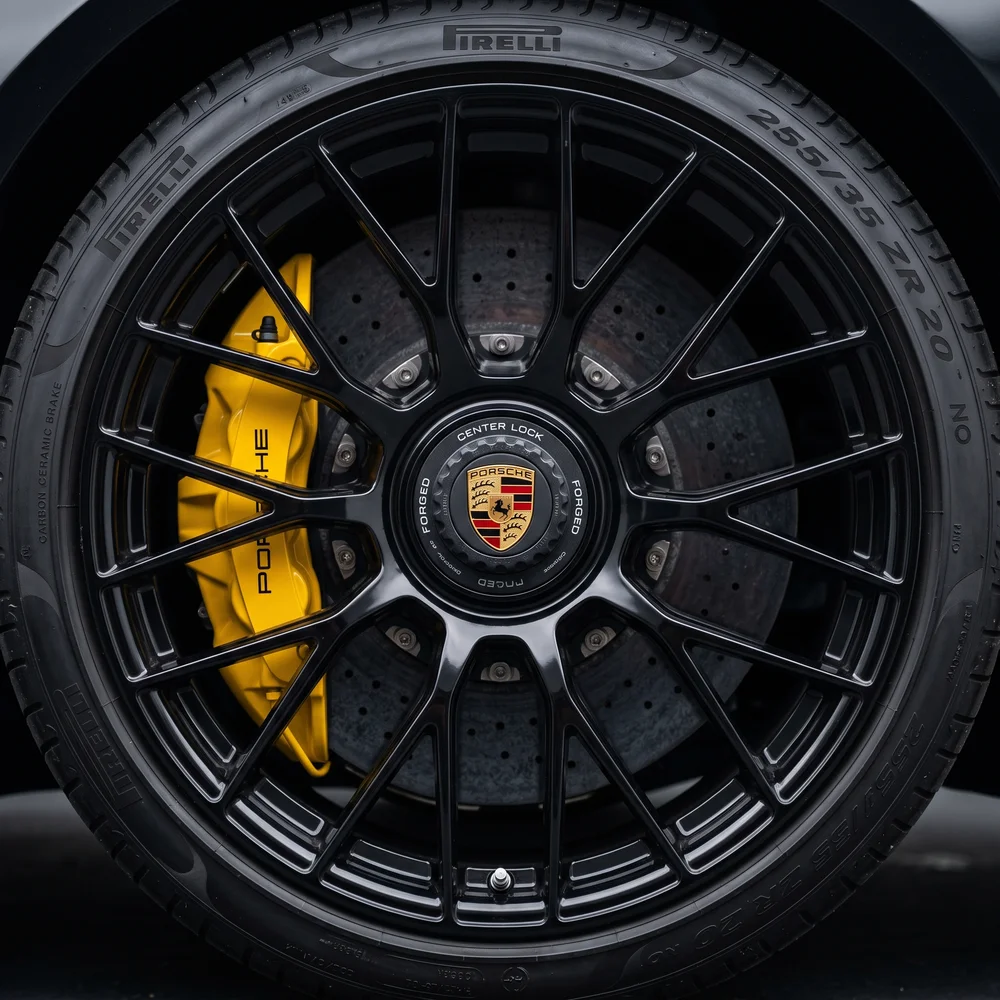
Steel brakes are standard; Porsche Ceramic Composite Brakes (PCCB) are available. Ceramic discs reduce unsprung mass and resist fade under sustained high-speed use.