Unofficial Porsche-inspired concept created for portfolio purposes. Not affiliated with, endorsed by or connected to Dr. Ing. h.c. F. Porsche AG.
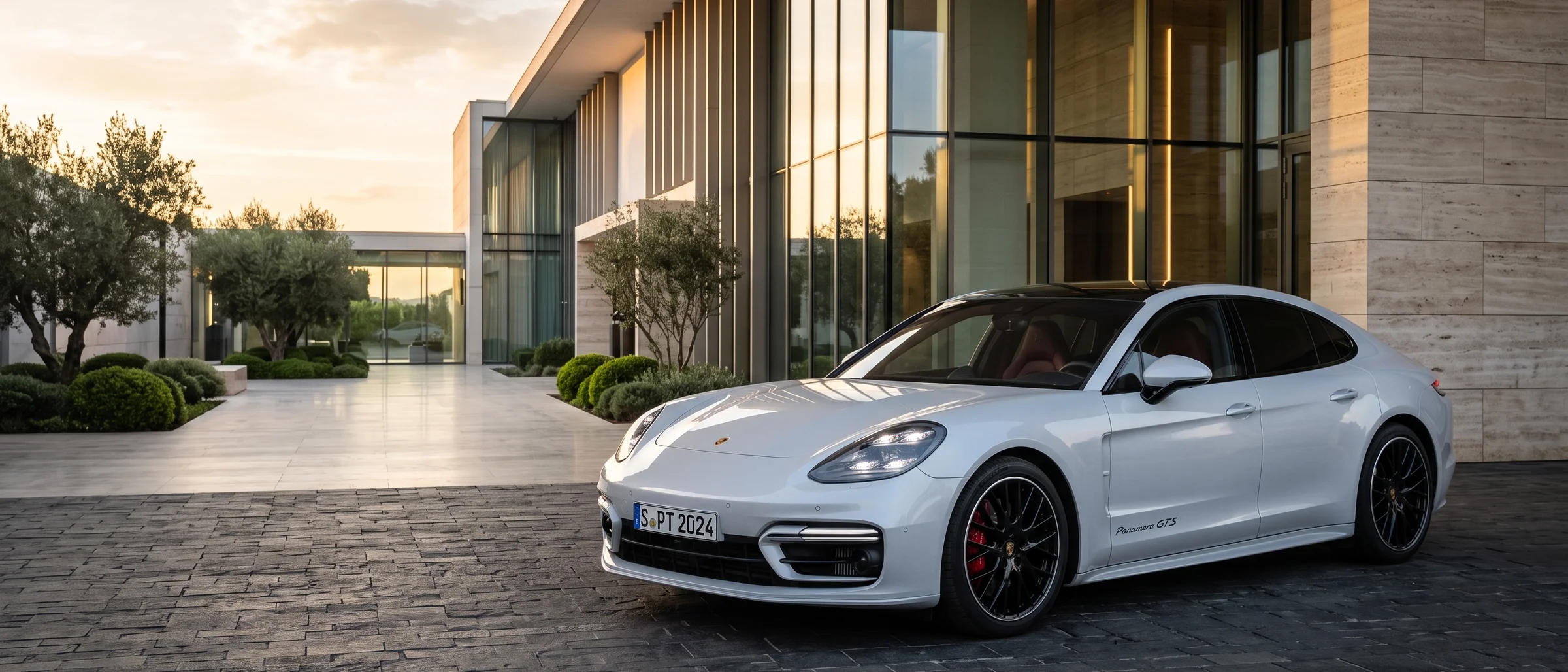
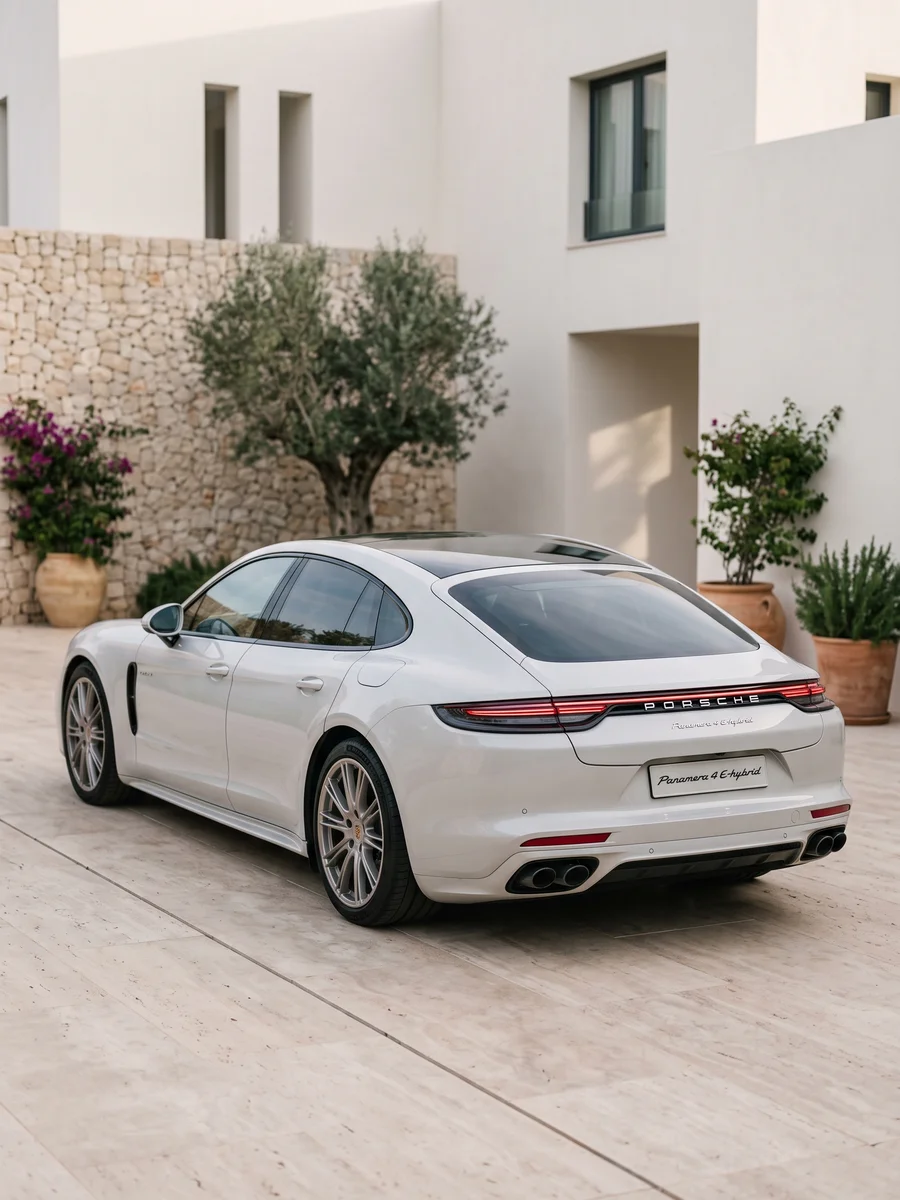
[IMAGE PLACEHOLDER — PANAMERA HERO — PEARL WHITE — ARCHITECTURE]/images/panamera-hero.webp21 : 9
Third generation · Pearl White
04 · Luxury Performance Sedan
Panamera
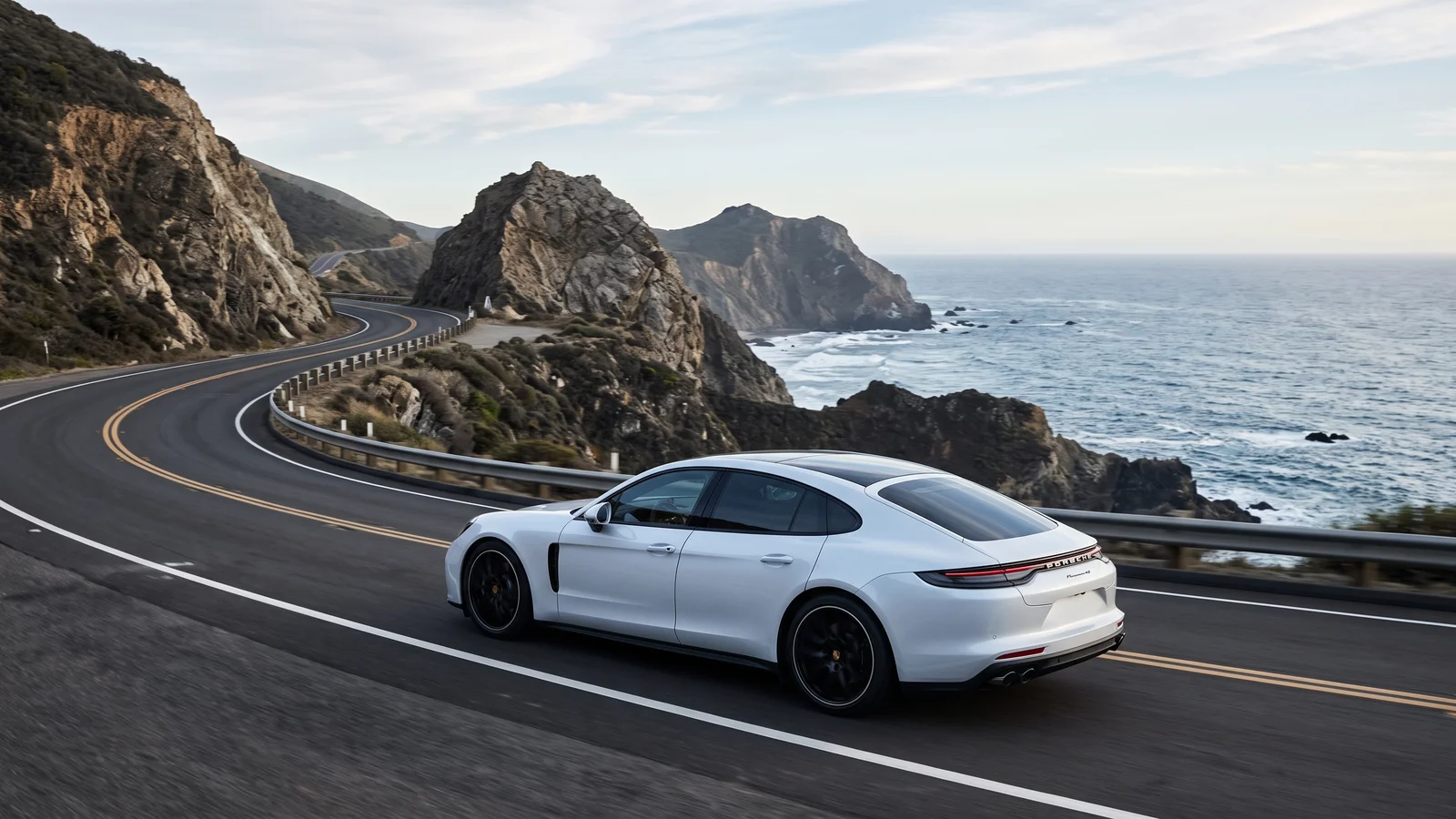
Four seats, no apology. A full-size luxury sedan with a sports car chassis brief. The Turbo E-Hybrid pairs a 4.0-litre V8 biturbo with an electric motor for 680 PS of system power.
In production
680PS
Turbo E-Hybrid, system
3.2s
0–100 km/h
83km
Electric range, WLTP
04
Overview
Third generation
Four seats, no apology.
The Panamera answers a specific question: how much of a sports car can survive the addition of four full seats, a long wheelbase and a luxury interior. The current Turbo E-Hybrid combines a 4.0-litre V8 biturbo with an electric motor integrated into the eight-speed PDK, and can cover a WLTP-rated 75 – 83 km on battery alone.
Each block names one variant, one model year and one market. Figures are not interchangeable between trims — a number quoted for a GTS does not describe a Carrera.
Panamera Turbo E-Hybrid
2025 model year, third generationEurope (EU), WLTP
Combustion engine
4.0-litre V8 biturbo, 382 kW / 519 PS
Electric motor
140 kW / 190 PS
System power
500 kW / 680 PS
0–100 km/h
3.2 swith Sport Chrono Package
Top speed
315 km/h
Electric range (comb.)
75 – 83 km
Battery capacity
25.9 kWh
Max. AC charging power
11 kW
Transmission
8-speed PDK
Drivetrain
All-wheel drive with PTM
Source: porsche.com — Panamera Turbo E-Hybrid model page
Scope. Values are EU figures
measured to WLTP where applicable and were current when this page was written. Specifications change by
model year, variant and market — always check porsche.com for the current figure in your region.
Interior
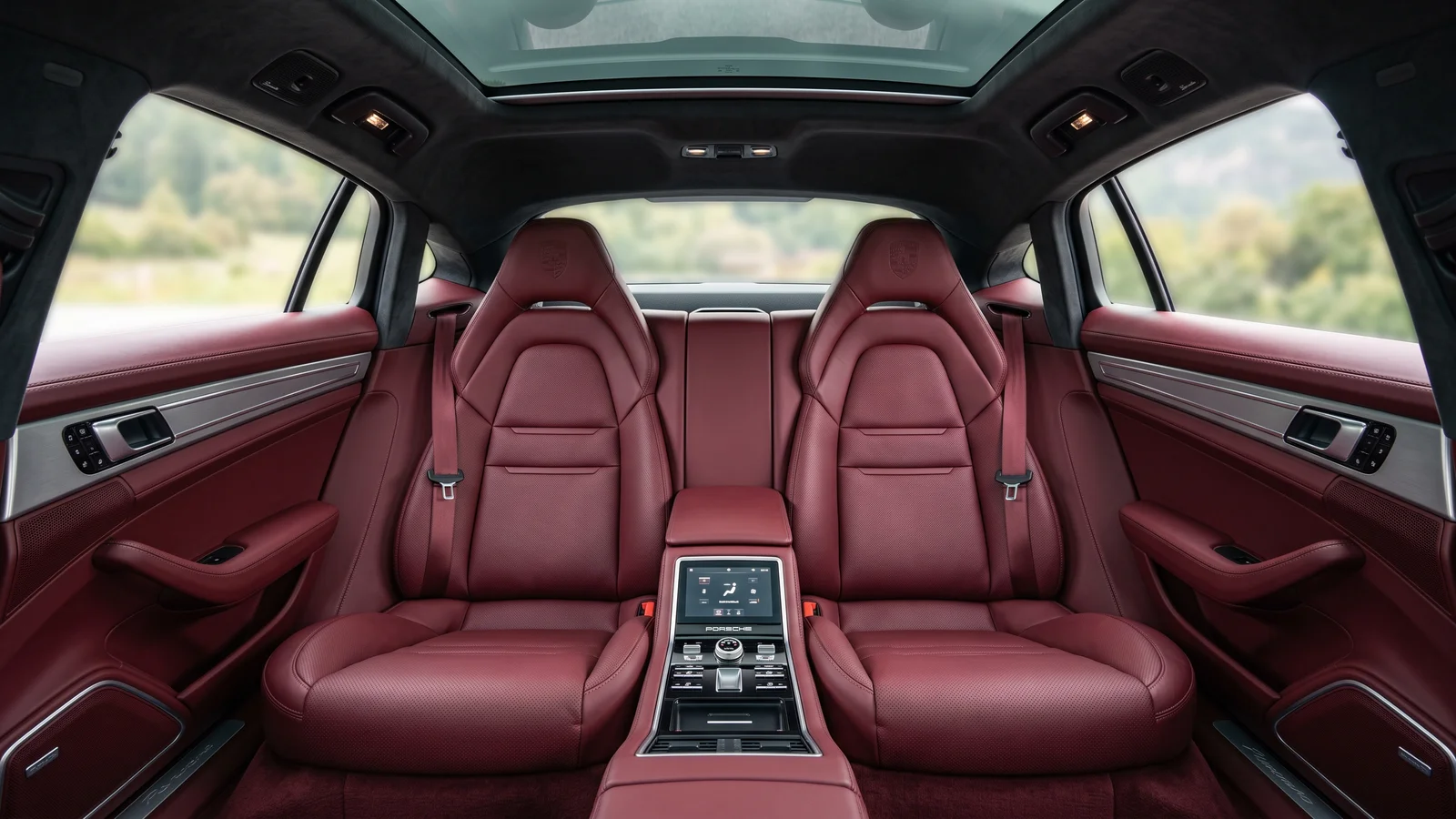
Burgundy / Bordeaux leather
The cabin follows the same rule as the exterior: a small number of materials, used honestly, with the driver as the reference point.
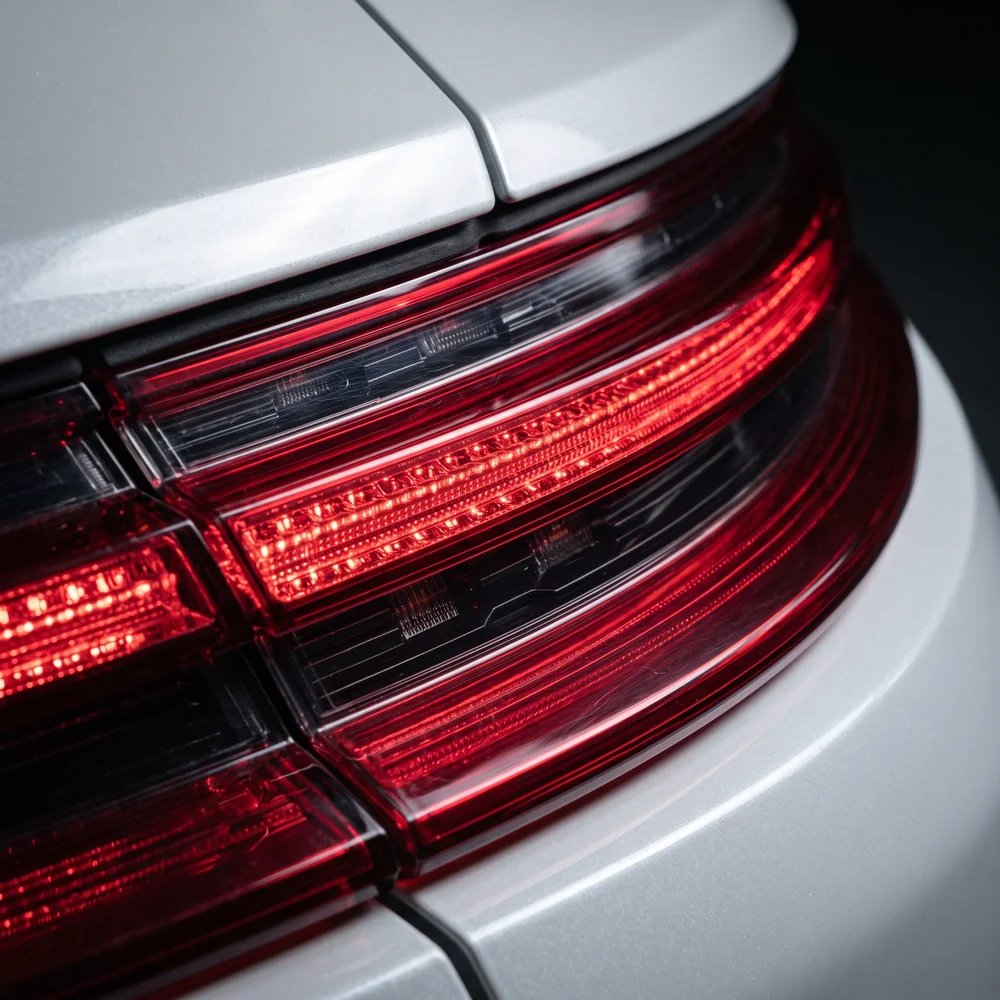
06Lighting Indirect ambient light, no coloured wash
Engineering
How it is built
Four decisions that shape how this car behaves — described in the terms the engineers use, without invented terminology.
Plug-in hybrid layout
The electric motor sits inside the eight-speed PDK, between engine and transmission output. It can drive the car alone, fill torque gaps during gearshifts, or add its output to the V8 under full load.
Adaptive air suspension
Air springs allow the Panamera to run a soft rate for ride comfort and a firm rate for body control without a mechanical compromise, and to change ride height with speed and driving mode.
Rear-axle steering
Steering the rear wheels shortens the effective wheelbase at low speed for manoeuvrability and lengthens it at high speed for stability — a meaningful gain on a car of this length.
Aerodynamics
An adaptive rear spoiler deploys with speed and driving mode, trading drag for downforce only when the car needs it.