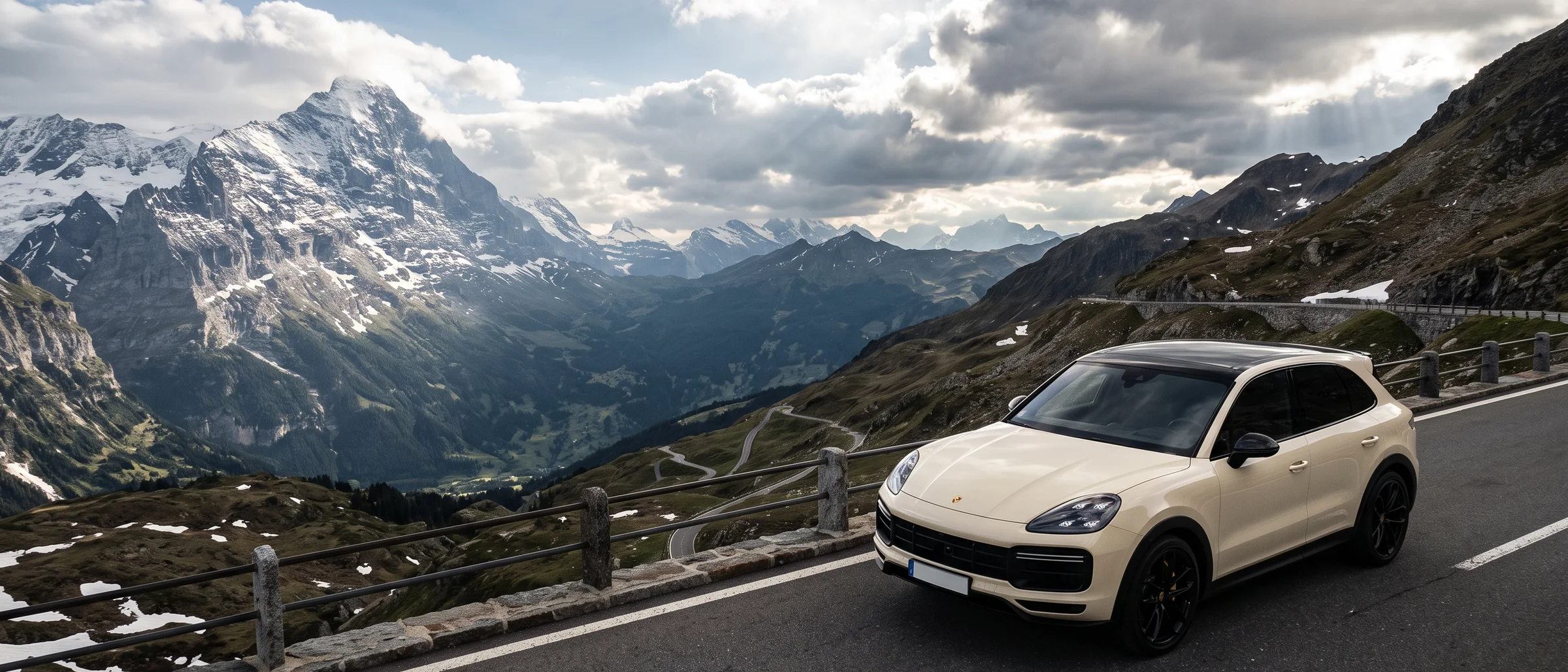
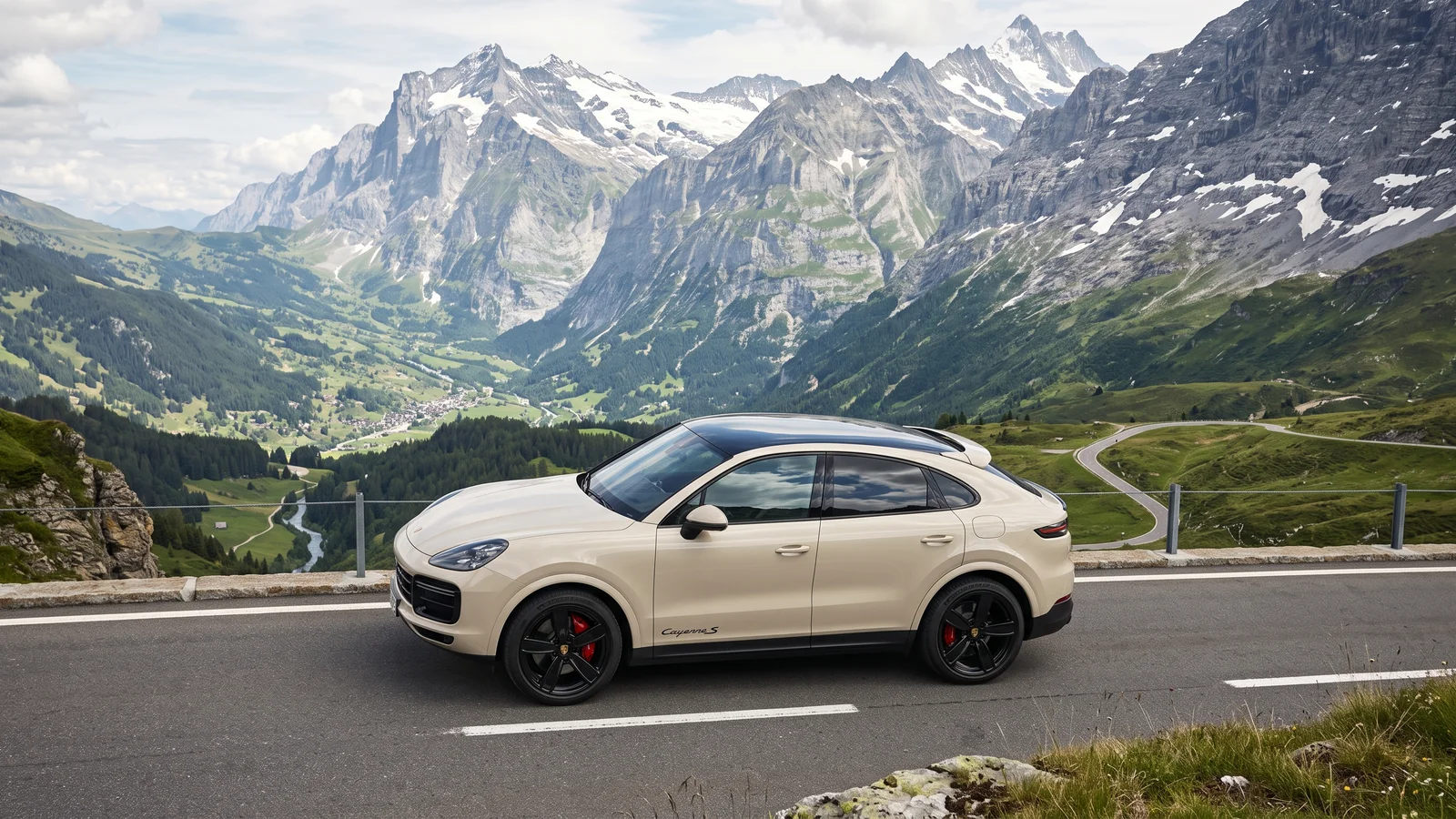
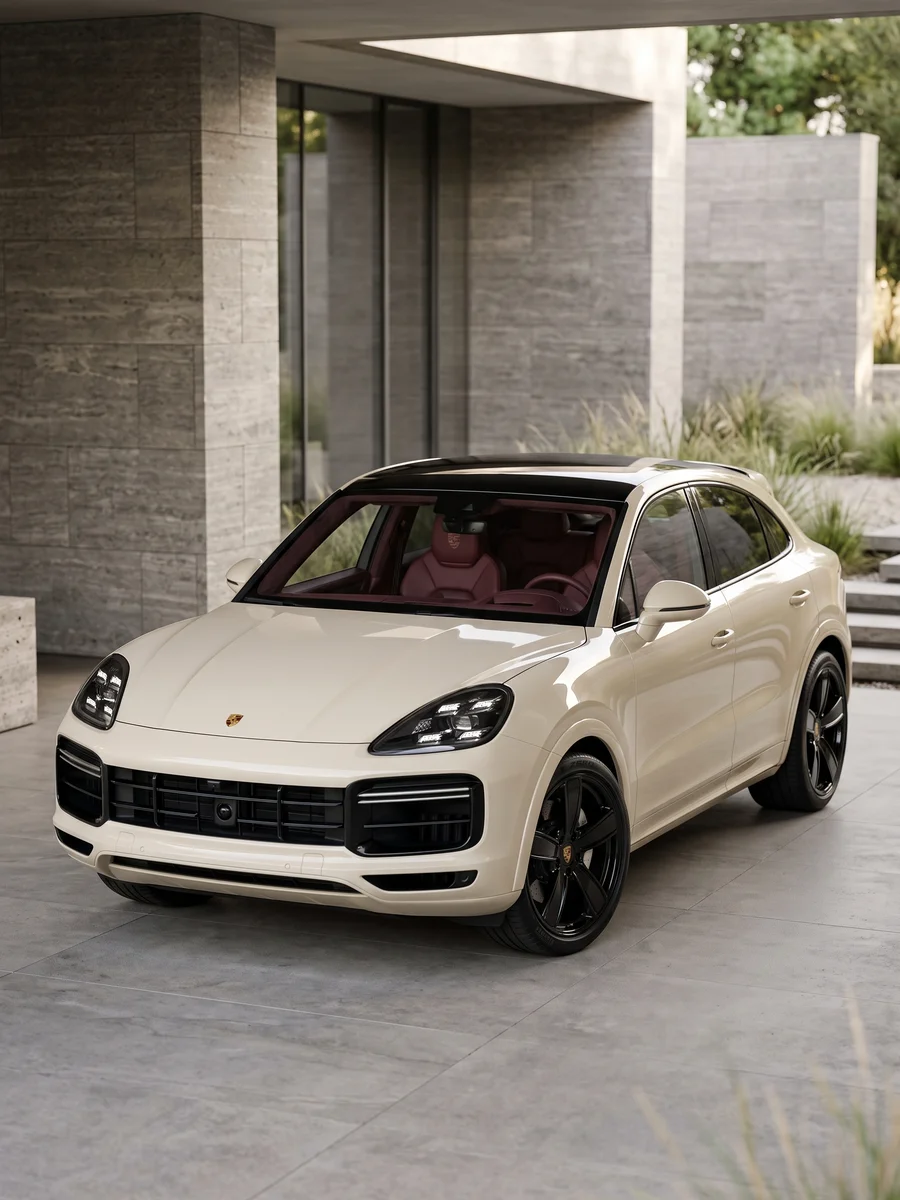
Combustion, hybrid and electric lines · Warm Cream / Ivory
06 · SUV
Cayenne
Range of one, capability of many. The Cayenne now spans petrol, plug-in hybrid and fully electric drivetrains. The Cayenne Turbo Electric is the most powerful production Porsche to date.
In production
1,156PS
Turbo Electric, Launch Control
2.5s
0–100 km/h
642km
Range, WLTP
06
Overview
Combustion, hybrid and electric lines
Range of one, capability of many.
Rather than replace the combustion Cayenne, Porsche extended the nameplate. Petrol and plug-in hybrid versions continue alongside the Cayenne Electric, which had its digital world premiere on 19 November 2025 and appeared publicly three days later at the Icons of Porsche festival in Dubai. With Launch Control the Cayenne Turbo Electric produces 850 kW — the highest output of any Porsche production car so far.
Each block names one variant, one model year and one market. Figures are not interchangeable between trims — a number quoted for a GTS does not describe a Carrera.
Cayenne Turbo Electric
Premiered 19 November 2025Europe (EU), WLTP
Power (normal mode)
630 kW / 857 PS
Power with Launch Control
850 kW / 1,156 PS
Push-to-Pass
+130 kW / 176 PS for 10 s
Max. torque
1,500 Nmwith Launch Control
0–100 km/h
2.5 s
Top speed
260 km/h
Range (comb.)
up to 623 km
Battery capacity
113 kWh gross
Max. DC charging power
up to 400 kW
DC charging 10–80 %
under 16 min
Source: Porsche Newsroom — Cayenne Electric world premiere
Cayenne Electric
Premiered 19 November 2025Europe (EU), WLTP
Power (normal mode)
300 kW / 408 PS
Power with Launch Control
325 kW / 442 PS
Max. torque
835 Nmwith Launch Control
0–100 km/h
4.8 s
Top speed
230 km/h
Range (comb.)
up to 642 km
Recharged range in 10 min
up to 325 km
Inductive charging
up to 11 kWoptional Porsche Wireless Charging
Source: Porsche Newsroom — Cayenne Electric world premiere
Cayenne (petrol, base)
2027 model yearEurope (EU), WLTP
Power
260 kW / 353 PS
0–100 km/h
5.7 swith Sport Chrono Package
Top speed
248 km/h
Transmission
Automatic
Drivetrain
All-wheel drive
Source: porsche.com — Cayenne model page
Scope. Values are EU figures
measured to WLTP where applicable and were current when this page was written. Specifications change by
model year, variant and market — always check porsche.com for the current figure in your region.
Interior
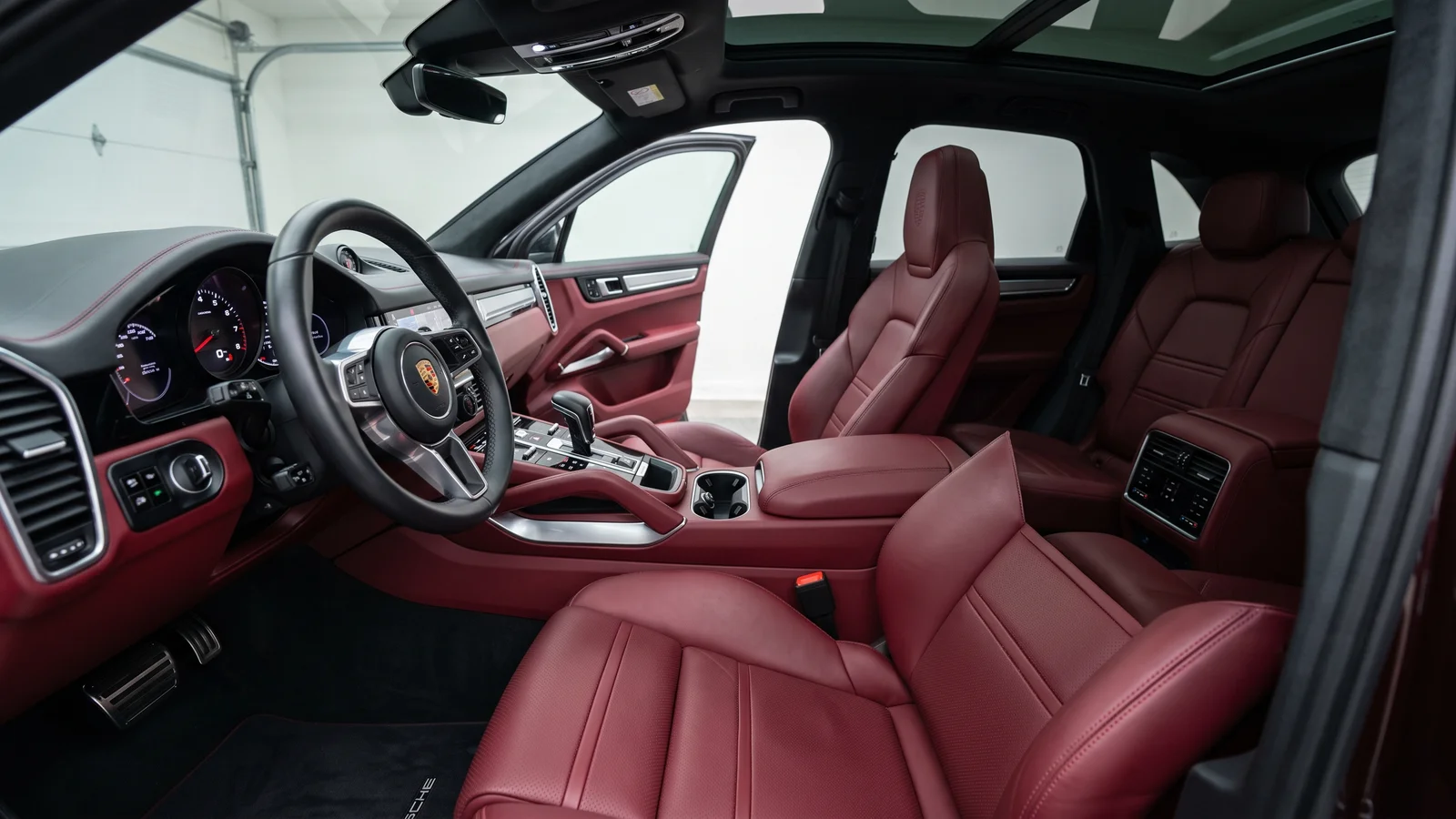
Deep Burgundy
The cabin follows the same rule as the exterior: a small number of materials, used honestly, with the driver as the reference point.
[IMAGE PLACEHOLDER — CAYENNE INTERIOR — DEEP BURGUNDY]/images/cayenne-interior.webp16 : 9
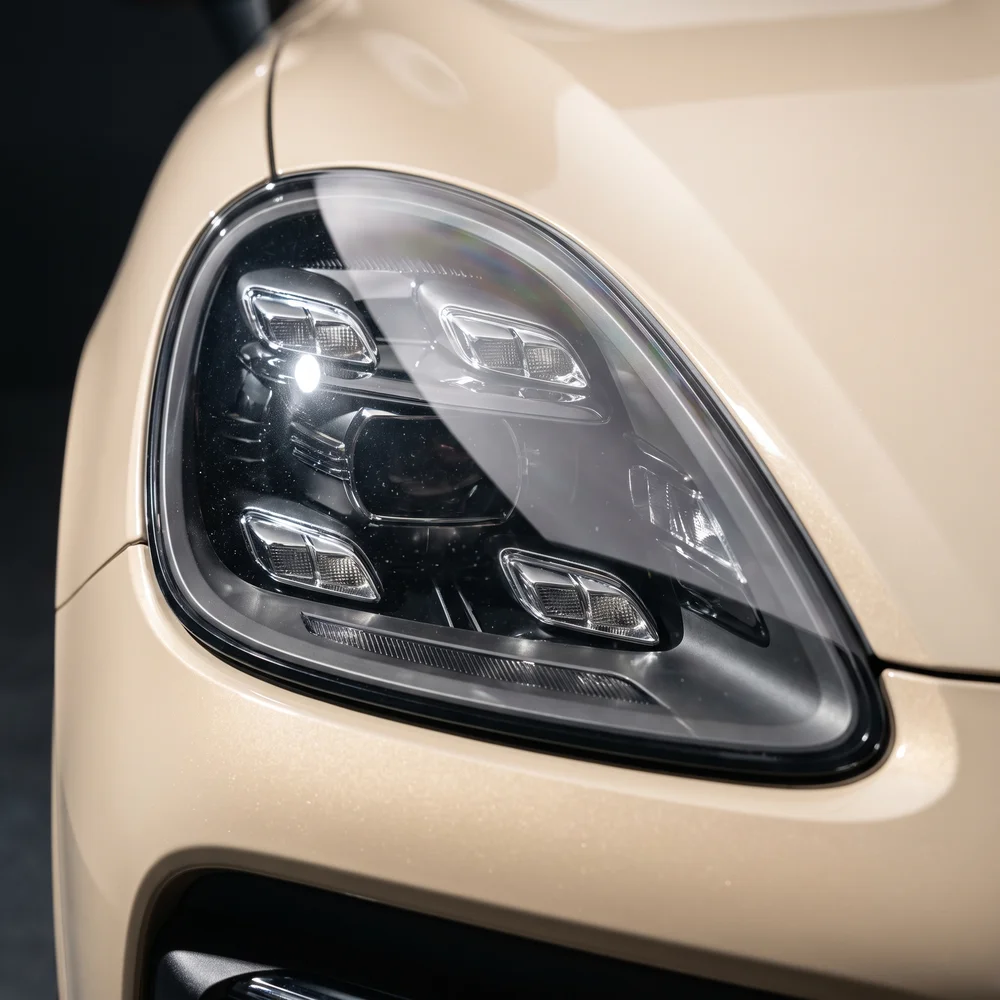
[IMAGE PLACEHOLDER — CAYENNE DETAIL — LED HEADLIGHT]/images/cayenne-detail.webp1 : 1
06Lighting Indirect ambient light, no coloured wash
Engineering
How it is built
Four decisions that shape how this car behaves — described in the terms the engineers use, without invented terminology.
Three drivetrains, one nameplate
Petrol, plug-in hybrid and fully electric Cayennes are sold in parallel. The electric versions use a newly developed 113 kWh battery with double-sided cooling.
800-volt charging
The Cayenne Electric accepts up to 400 kW DC and moves from 10 to 80 percent state of charge in under 16 minutes under ideal conditions — roughly 325 km of WLTP range added in ten minutes.
Inductive charging
An optional Porsche Wireless Charging system transfers up to 11 kW through a floor plate, with no cable handling at all.
Push-to-Pass
On the Turbo Electric, a steering-wheel control releases an additional 130 kW for ten seconds — a mechanism borrowed directly from motorsport practice.